Table Of Contents
What Happens When Scottsdale Hosts Stop Going Out—and Start Bringing the Chef In
The Shift Toward At-Home Luxury Dining
When the Restaurant Comes to You
Picture this: It's Thursday evening in Scottsdale, and you're planning a dinner for eight close friends.
You could spend the next hour calling restaurants, hoping for a reservation that accommodates everyone's schedule, or you could imagine something different—your dining room table set beautifully, your favorite playlist filling the space, and a professional chef preparing a multi-course meal in your kitchen while you pour wine and catch up with arriving guests.
This isn't about avoiding the effort of going out.
It's about reclaiming what makes hosting meaningful.
When the evening unfolds in your own home, there's no rushing to make a reservation time, no splitting checks under fluorescent lighting, no wondering if the table next to you can hear your conversation.
The atmosphere reflects your taste, not a corporate designer's vision of what ambiance should feel like.
A Response to Modern Life, Not a Passing Trend
In-home culinary services represent a fundamental shift in how Scottsdale residents choose to entertain.
This isn't a trend driven by novelty—it's a response to modern life, where time feels scarcer than money and experiences matter more than transactions.
For hosts who value both excellence and ease, bringing a chef into the home solves a problem restaurants can't: how to create a memorable evening without sacrificing the comfort and control that only home can provide.
The Scottsdale Host Profile: Affluence Meets Lifestyle
Taste, Travel, and Intentional Living
The typical Scottsdale host leads a life built on intention.
They've traveled enough to know what good service looks like, whether in Paris, Tokyo, or Napa Valley.
Their homes are carefully designed environments that reflect years of refining taste.
When they entertain, it's an extension of who they are, not a social obligation.
Time is the ultimate luxury for these hosts.
A morning tee time at Troon North, an afternoon meeting downtown, an evening at a gallery opening in Old Town—every commitment is carefully weighed.
Services That Adapt to You
Their expectations are shaped by a life where services adapt to them.
Personal trainers come to their home gym. Wine is delivered, curated to their taste.
The Scottsdale lifestyle is defined by this quiet confidence: that quality and convenience can coexist, and that the best experiences are designed around you, not around what's available.
Why Hosting at Home Has Become More Appealing Than Dining Out
The Hidden Frustrations of Restaurant Dining
Sarah hosted her book club at a restaurant last month.
The reservation was for seven, but two members were running late, and the hostess gave away their table.
They ended up squeezed into a corner booth near the kitchen, where the noise made conversation nearly impossible.
Sarah left thinking about all the things that had gone wrong instead of the conversation she'd wanted to have about the book.
This is the reality of group dining in popular restaurants, especially in Scottsdale where demand often exceeds capacity.
You're rushed through courses.
You're asked to vacate the table for the next seating.
You can't quite hear the person across from you because someone at the next table is celebrating loudly.
Home as a Sanctuary for Genuine Connection
Home removes these friction points entirely.
There's no hostess to negotiate with, no ambient noise you can't control, no time limit on how long you can linger over dessert.
Guests arrive and immediately relax because they're in a familiar, comfortable environment.
Hosting stops feeling like a performance and starts feeling like what it should be: an act of generosity that brings joy to everyone involved.
Convenience and Stress Reduction for the Host
The Freedom to Be Present
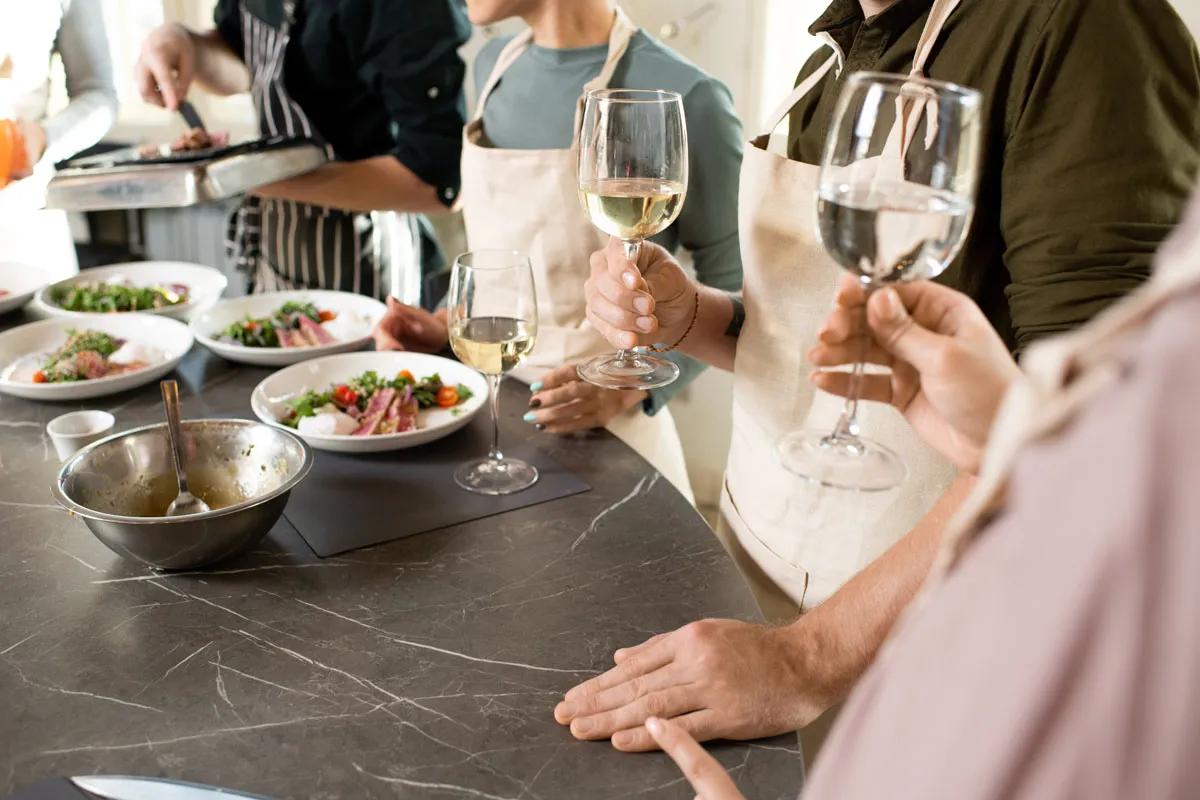
Imagine greeting your first guest at the door with a cocktail in hand, genuinely happy to see them, instead of wiping flour off your forehead and apologizing for being mid-recipe.
This is what changes when a chef handles the culinary side of hosting.
You're no longer split between two roles—cook and host—trying to manage both poorly.
You become fully present in the moment. The invisible labor of hosting is significant.
It's the planning, the shopping, the timeline management, the constant mental checklist of what needs to happen when.
It's remembering dietary restrictions and trying to time everything perfectly.
These details create a low-grade anxiety that guests rarely notice but hosts always feel.
When the Evening Flows Naturally
When a professional chef takes over, that anxiety evaporates.
Dietary restrictions are handled in advance. Timing becomes someone else's expertise.
The kitchen becomes part of the entertainment—a place where guests can drift in, watch something interesting happen, and drift back out.
Friends comment on how relaxed you seem.
The evening flows naturally because you're not the one making it flow.
You're simply there, enjoying it alongside everyone else.
Personalization as the Core Advantage of In-Home Culinary Service
Food That Tells Your Story
Tom and Linda spent two weeks in Tuscany last fall, and when they decided to host an anniversary dinner at their Scottsdale home, they mentioned that trip to their chef.
The menu that emerged wasn't Italian in an obvious way, but it captured the feeling of that evening—hand-rolled pasta with wild mushrooms, a salad with fresh figs and prosciutto, wine chosen to echo what they'd loved overseas.
A chef working in your home has the time and focus to understand context.
Flexibility That Responds in Real Time
The flexibility extends beyond planning.
If a dish is spicier than expected, it can be adjusted on the spot.
If guests are lingering over cocktails longer than anticipated, pacing shifts.
Children are offered something simple and appealing without fuss.
These small acts of consideration accumulate into something larger: a meal that feels like it was designed specifically for the people in the room, because it was.
Health, Wellness, and Dietary Control
When Dietary Needs Are Handled with Care
Rebecca doesn't make a big deal about her tree nut allergy anymore.
But at her friend's dinner party last month, something shifted.
Before she even arrived, the chef had called to confirm the details. Every dish was prepared in a nut-free environment.
There were no awkward conversations, no feeling like an inconvenience.
She simply ate, enjoyed, and forgot to worry for the first time in years.
The host is no longer the translator, awkwardly explaining dietary restrictions to servers.
These details are handled in advance, built into the menu from the beginning.
The chef sources ingredients with intention, knowing exactly what's in each dish because they've made everything from scratch.
Wellness as Part of Luxury
For many Scottsdale residents, wellness isn't a restriction—it's a value.
They don't want to choose between eating well and eating luxuriously.
Clean ingredients, thoughtful sourcing, and conscious preparation aren't compromises; they're part of what luxury means now.
An in-home chef can deliver both: food that's indulgent and beautiful, but also aligned with how people actually want to live.
The Experience Economy: Dining as Entertainment
The Kitchen as Theater
The real shift in how people entertain isn't just about food—it's about what food creates.
Dining has become theater. The kitchen is the stage.
Guests aren't just waiting in the living room for a meal to appear; they're drawn to where things are happening.
They watch a sauce reduce. They ask questions about technique.
They smell rosemary hitting hot oil and drift closer to see what's being made.
This dynamic changes the energy of the entire evening.
Conversations flow and merge as people move between spaces.
The meal isn't just consumed; it's experienced collectively. Dishes become talking points. The plating sparks conversation.
Creating Memories That Last
These evenings have staying power.
Months later, guests reference that dinner where the chef made something incredible with miso, or the night everyone ended up in the kitchen learning to fold dumplings.
The meal becomes a story, and the story becomes part of your friendship.
For Scottsdale hosts who understand this, bringing a personal chef into the home isn't about outsourcing cooking.
It's about elevating hosting into something more meaningful.
Why Scottsdale Homes Are Ideal Venues for Chef-at-Home Experiences
Architecture Designed for Entertainment
Walk into most Scottsdale homes built in the last decade, and you'll notice the kitchen isn't tucked away. It's central, open, designed to be seen.
Islands stretch eight feet long with seating for six.
Appliances are professional-grade. Sightlines connect the kitchen to the living areas, to the dining space, sometimes straight through to the pool.
The chef isn't isolated behind a closed door—they're part of the gathering, working in a space built to showcase exactly what they do.
The island becomes the heart of the evening, where cocktails are poured, appetizers are assembled, and conversations naturally collect.
Indoor-Outdoor Flow and Desert Luxury
The indoor-outdoor flow that defines Scottsdale design adds another layer.
A meal might begin on the patio with cocktails as the sun sets over the McDowell Mountains.
Dinner unfolds inside. Dessert moves back outside, served by the pool under string lights.
Even vacation rentals capitalize on this.
High-end properties in North Scottsdale or Desert Mountain become private dining destinations.
When a professional chef is cooking in that kitchen and serving on that patio, guests feel like they've stepped into a resort experience that's entirely theirs.
What a Chef-at-Home Experience Typically Looks Like
Common Service Formats
Choosing the Right Energy for Your Gathering
The format of an in-home chef experience isn't prescribed—it's chosen based on the energy you want to create.
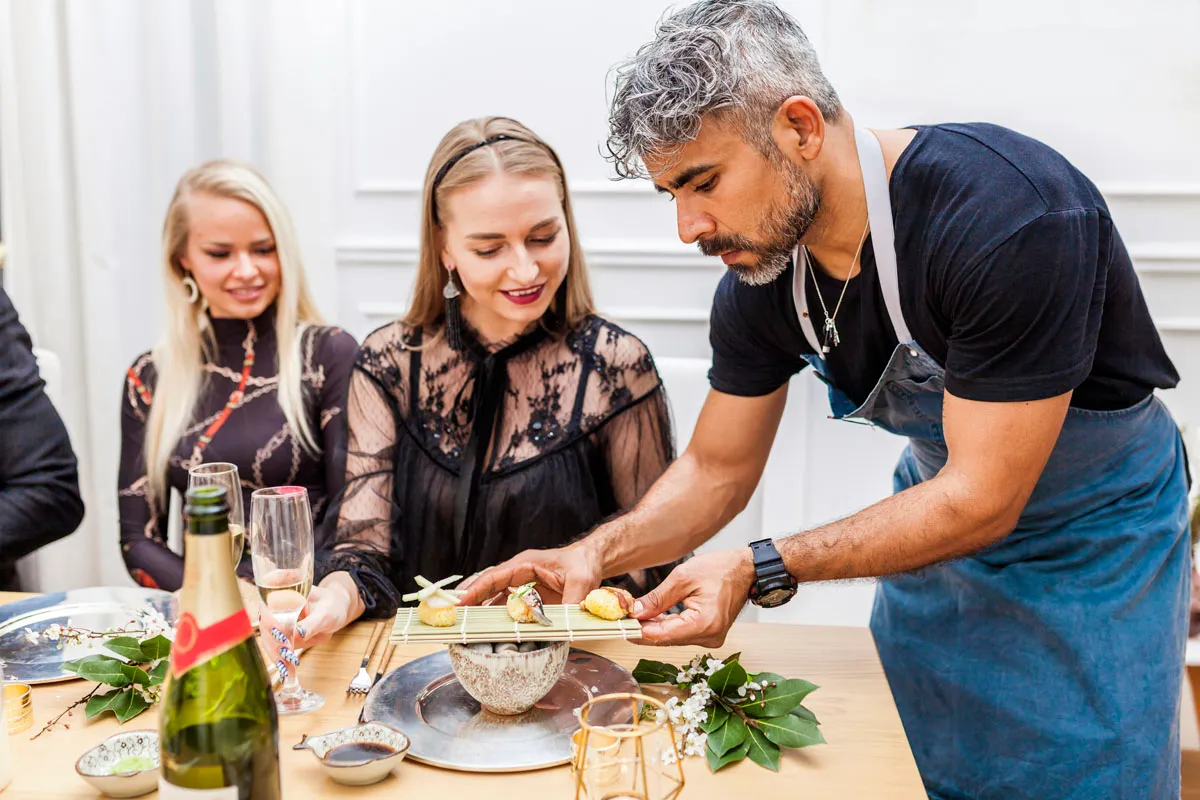
A multi-course tasting menu brings a sense of occasion and theater.
Each dish arrives as a small, composed plate, designed to showcase a particular flavor or technique.
Family-style service creates a different feeling—large platters and bowls that encourage sharing, both of food and conversation.
Cocktail events with passed hors d'oeuvres suit gatherings where movement and mingling matter more than sitting.
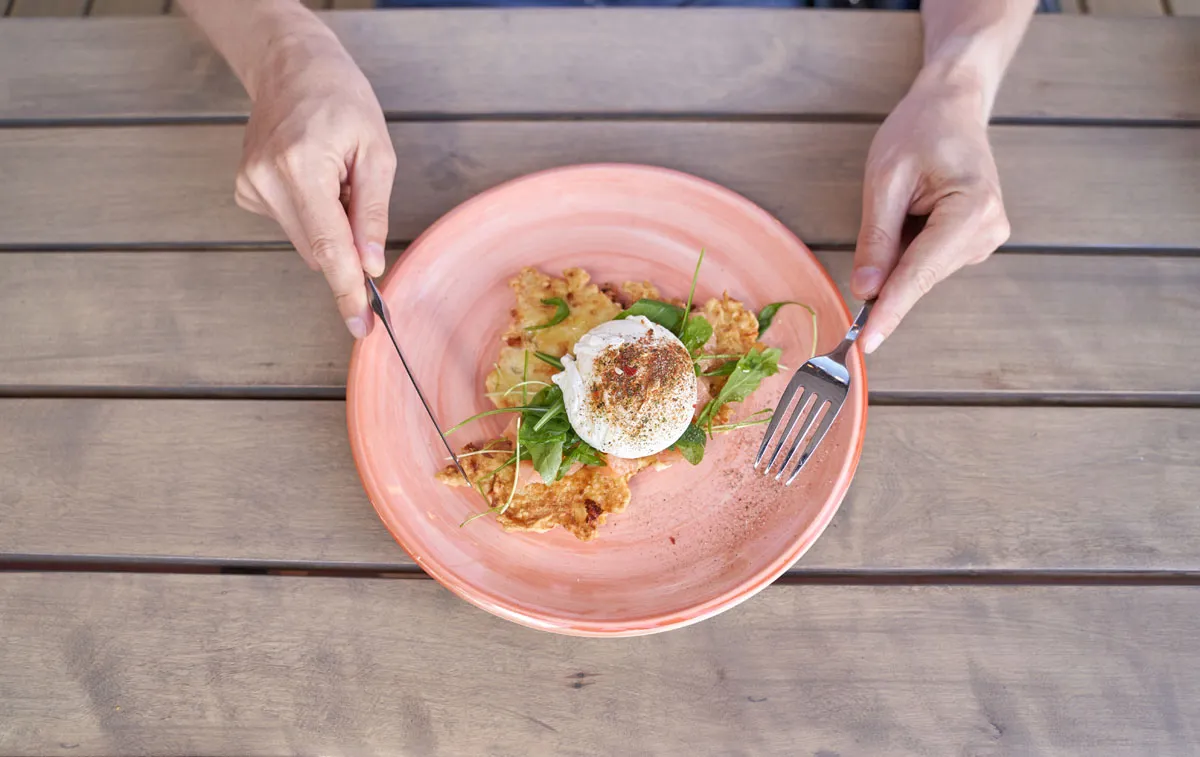
For brunches, the tone shifts toward indulgence without pretense—perfectly poached eggs, pastries made that morning, fresh juices pressed to order.
These formats aren't about formality—they're about matching the food to the feeling you want your guests to have.
Menu Style and Customization
Seasonal Inspiration and Arizona Flavors
The best menus aren't built from templates—they're shaped by the season, the occasion, and the people who'll be eating.
Arizona flavors show up not as gimmicks but as genuine expressions of place.
Prickly pear might appear in a mignonette for oysters. Mesquite could add smoke to grilled vegetables.
Chiltepin peppers bring heat that's bright rather than overwhelming.
These ingredients aren't forced—they're woven in when they make sense.
Elevated Comfort and Visual Storytelling
Comfort isn't replaced by sophistication; it's elevated by it.
A simple roasted chicken becomes extraordinary through technique—dry-brined, butter-basted, rested properly. Familiar foods become the best versions of themselves.
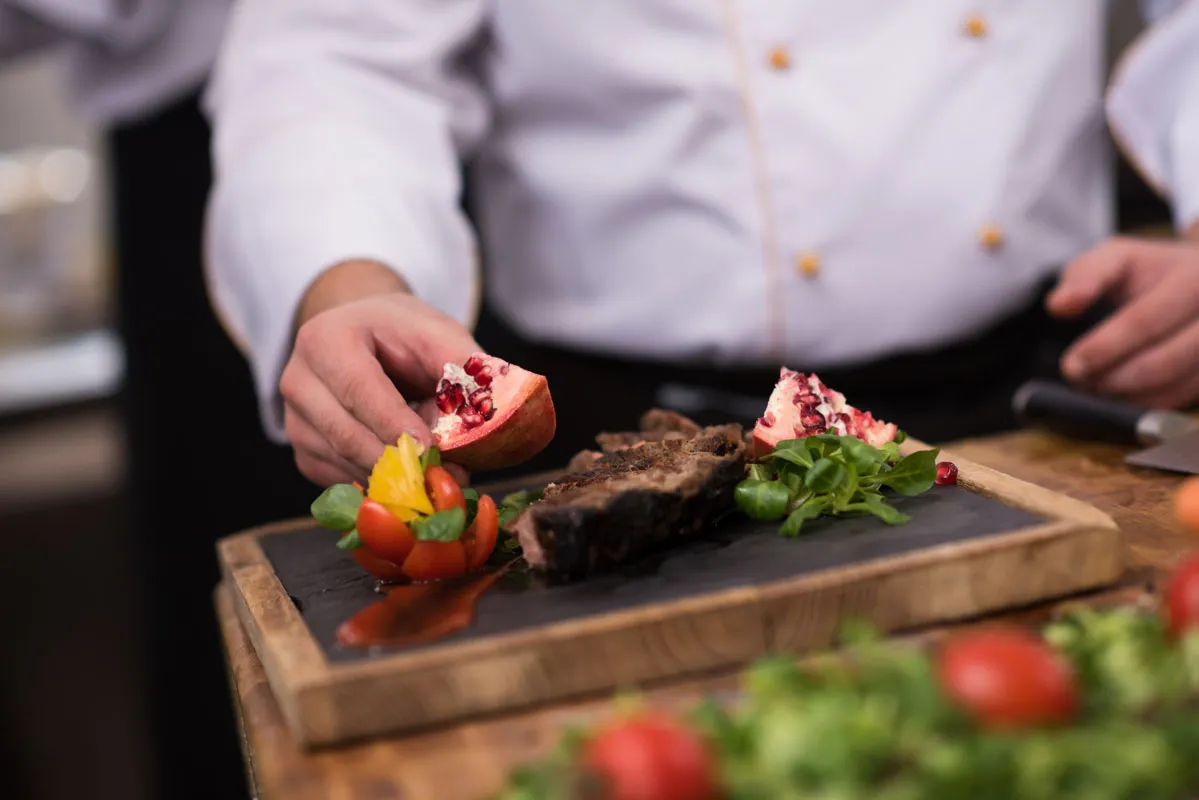
Plating tells a story visually—colors balanced, heights varied, negative space used intentionally.
Each course flows into the next with a logic that feels cohesive.
Professional Standards, Safety, and Trust in In-Home Culinary Services
Licensing and Food Safety in Arizona
What guests rarely see is the infrastructure that makes in-home dining safe and professional.
In Arizona, chefs operating in private homes adhere to food safety standards that match commercial kitchens.
Proper food handling, temperature control, and cross-contamination prevention are built into how trained chefs work.
This professionalism operates quietly.
Ingredients are sourced from reputable suppliers. Surfaces are sanitized. Allergen protocols are followed.
For many Scottsdale residents, this peace of mind matters as much as the food itself.
What Hosts Should Look For
The first conversation with a potential chef reveals a lot.
Are they asking thoughtful questions about your guests, your space, your vision?
The best chefs approach each event with curiosity, treating it as a collaboration rather than a transaction.
Transparency matters.
You should know where ingredients are coming from, how the chef will use your kitchen, when they'll arrive, and how long they'll need for setup and cleanup.
Clear communication prevents misunderstandings later.
Red Flags to Avoid
Vague answers create unnecessary tension.
If you ask about food safety protocols and receive deflection, that's worth noting.
If someone overpromises but can't explain details, trust your instincts.
In-home dining is inherently intimate.
You're opening your space and introducing a chef to people you care about. That trust should feel earned, not assumed.
The right chef makes you feel more relaxed about hosting, not less.
Bringing the Chef-at-Home Experience to Life
Your Gathering, Your Way
Every gathering has its own rhythm. Some evenings call for restraint.
Others want abundance. There’s no single way this experience should look—only what feels right for you.
If you’re curious how this might work in your own home, the best place to start is a conversation.
Not a commitment—just an exchange of ideas.
What kind of evening are you imagining? How do you want guests to feel?
Menus are flexible. Formats adapt. Pacing shifts naturally. Whether it’s a quiet dinner for six or a milestone celebration, the right chef treats your gathering as something personal.
If you’d like to explore what Tableside Gourmet could bring to your next event, we’re happy to talk.
Questions, half-formed ideas, or a clear vision—all are welcome.
The goal isn’t persuasion. It’s understanding what makes hosting feel good, and seeing what’s possible from there.
Frequently Asked Questions
1. Is an in-home chef experience only for special occasions, or does it work for smaller gatherings too?
Not every chef-at-home experience needs to feel like a milestone celebration. Many Scottsdale hosts book chefs for intimate dinners, casual birthdays, or even weeknight gatherings when they want the evening to feel intentional without being formal. The experience scales naturally—what changes is the pacing and style, not the care or quality.
2. How much involvement does the host need during the event?
Very little. Once preferences and logistics are discussed ahead of time, the chef manages the flow of the meal independently. Hosts are free to greet guests, participate in conversations, or step away entirely. Many hosts say the biggest surprise is how present they feel compared to traditional hosting.
3. What happens if plans change mid-event?
One of the understated advantages of an in-home chef is adaptability. If guests linger over drinks, courses can be slowed. If energy shifts toward the patio, service adjusts. Unlike a restaurant schedule, the evening isn’t locked into a rigid timeline—it responds to what’s actually happening.
4. Do guests typically interact with the chef, or is it more behind-the-scenes?
That depends on the tone you want. Some hosts prefer quiet professionalism, others enjoy conversation, questions, and watching techniques unfold. Because the chef is in your space, interaction feels organic rather than staged—and it’s easy to set boundaries either way.
5. How far in advance should a chef-at-home experience be planned?
While some chefs can accommodate short notice, planning ahead allows for better menu development, ingredient sourcing, and alignment with your vision. That said, many Scottsdale hosts reach out with just a general idea—date, number of guests, mood—and refine details collaboratively from there.