Table Of Contents
The Art of Wedding Catering in 2026: Menu Trends, Budgets & Guest Experience
2026 at a Glance: The Year Wedding Dining Becomes an Experience
There's a shift happening in the way discerning couples approach their wedding day — and it begins long before the first guest arrives.
Not long ago, wedding catering meant selecting between chicken or fish, choosing from a standard menu, and hoping the evening ran smoothly.
That era is firmly behind us.
In 2026, couples planning luxury celebrations aren't simply organizing a meal. They're commissioning an experience — one that unfolds with intention across an entire evening, reflects the depth of who they are as a couple, and leaves every guest with the distinct sense that no detail was left unconsidered.
Food has become the emotional signature of the modern luxury wedding.
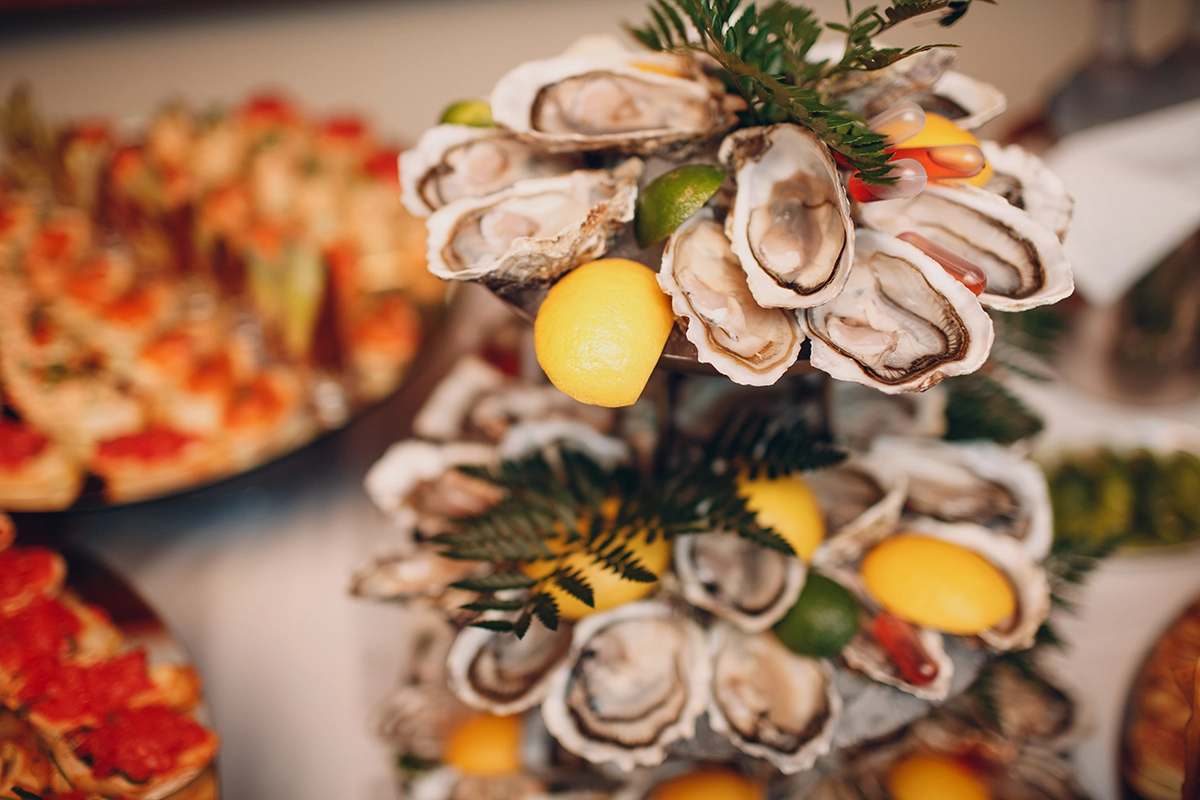
It's the first impression made at cocktail hour when a guest reaches for a freshly shucked oyster from an iced display.
It's the quiet drama of a coursed dinner arriving tableside with precision.
It's the moment late in the evening when a surprise late-night station reappears and the entire room comes alive again.
For couples who understand that hospitality is its own art form, this guide is the place to start.
2026 Menu Trends & Standout Food Ideas
Story-Driven & Personalized Menus
The most extraordinary wedding menus don't begin with a list of dishes.
They begin with a story.
Where did the journey start? What was eaten on a first trip abroad?
Is there a family recipe — passed down through generations — that deserves a moment at the finest table you'll ever set?
These are the questions that shape a menu worth remembering.
In 2026, the most celebrated weddings are built around meals that move through the evening like chapters — cocktail hour as the opening act, dinner as the heart of the narrative, dessert as the graceful finale.
For couples celebrating in Arizona, there is a particularly compelling culinary identity to draw from.
The Southwest's bold flavors, desert-grown ingredients, and richly layered food traditions offer a canvas that feels both specific to place and deeply personal.
Luxury Impact Pieces: Raw Bars & Culinary Towers
Some moments in a reception stop guests mid-sentence. A masterfully composed raw bar is one of them.
Oysters on hand-chipped ice, chilled jumbo shrimp, stone crab claws, delicate ceviche — arranged with the precision of a still life and styled with quiet confidence, a seafood display at cocktail hour communicates something immediately: this evening is extraordinary.
Multi-tier towers built around seasonal seafood, aged charcuterie, or elaborate dessert architecture serve the same purpose.
They are, at once, nourishment and sculpture.
Staged within Scottsdale's stunning open-air venues and bathed in warm desert light, they become defining visual moments of the celebration.
Global & Street-Food Inspired Menus
Some of the most sophisticated wedding menus being created right now are built around the world's great street food traditions — elevated to a standard that would feel at home in any fine-dining context.
Not as an economic measure. As a deliberate, joyful creative choice.
Handcrafted tacos with heritage-grain tortillas and house-made salsas.
Korean bao with slow-braised short rib.
Moroccan-spiced samosas with saffron aioli.
Vietnamese bánh mì composed to order at a chef-attended station.
These dishes carry culture, memory, and genuine depth of flavor.
For receptions designed around movement and energy, they keep guests animated and present.
And a perfectly orchestrated late-night reveal — a churro station arriving at the edge of the dance floor, or a taco bar making a triumphant return — is among the most talked-about moments a reception can produce.
Plant-Forward & Inclusive Dining
In 2026, dietary inclusivity is not an accommodation. It is a hallmark of genuine luxury hospitality.
The finest menus are architected so that every guest — plant-based, gluten-free, or simply open to discovery — encounters dishes designed with the same intention and craft as everything else on the table.
Roasted cauliflower with charred harissa and cold-pressed herb oil.
Wild mushroom risotto finished with aged truffle.
Heirloom tomato tart with house-cultured ricotta and micro basil.
These are not substitutions. They are centerpieces. When plant-forward cuisine receives the creative investment it deserves, every guest at the table is equally, beautifully served.
Hyper-Local & Nature-Inspired Flavors
Arizona possesses an ingredient story unlike anywhere else in the country — and the most thoughtful menus are beginning to honor it fully.
Prickly pear. Medjool dates. Blood orange. Hatch chiles. Mesquite-smoked proteins.
Desert herbs harvested from the landscape just beyond the city's edge.
When these ingredients appear on a wedding menu, the meal stops feeling like something that could have happened anywhere and begins to feel like something that could only have happened here.
Seasonal design adds another layer of intention: spring herbs, summer stone fruit, fall mushrooms, winter citrus.
It is the kind of quiet thoughtfulness that guests sense even when they can't quite articulate why the food felt so perfectly right.
High-Low Pairings & Upscale Nostalgia
There is something genuinely, unexpectedly moving about being handed a flute of vintage champagne and then offered a piece of perfectly fried chicken.
The high-low pairing — fine technique and luxury ingredients applied to the dishes guests grew up loving — has become one of the most emotionally resonant directions in contemporary wedding dining.
Truffle mac and cheese presented in individual cast-iron cocottes.
Wagyu sliders on house-made brioche.
Chicken and waffles at a late-night station that arrives like a gift.
The delight on a guest's face in that moment is something no amount of formal plating can manufacture.
It is surprise, warmth, and nostalgia converging at once — and it is, quietly, one of the most human things a luxury wedding menu can offer.
Grazing Tables, Dessert Displays & Late-Night Moments
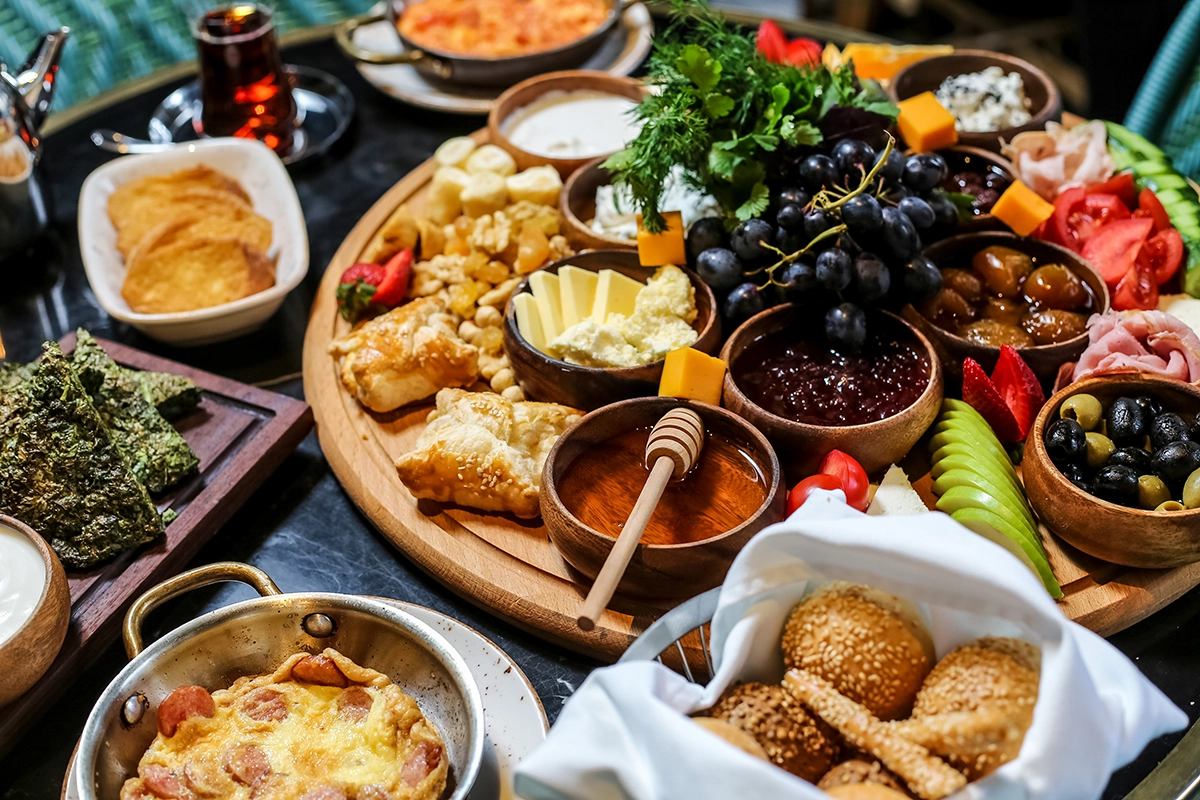
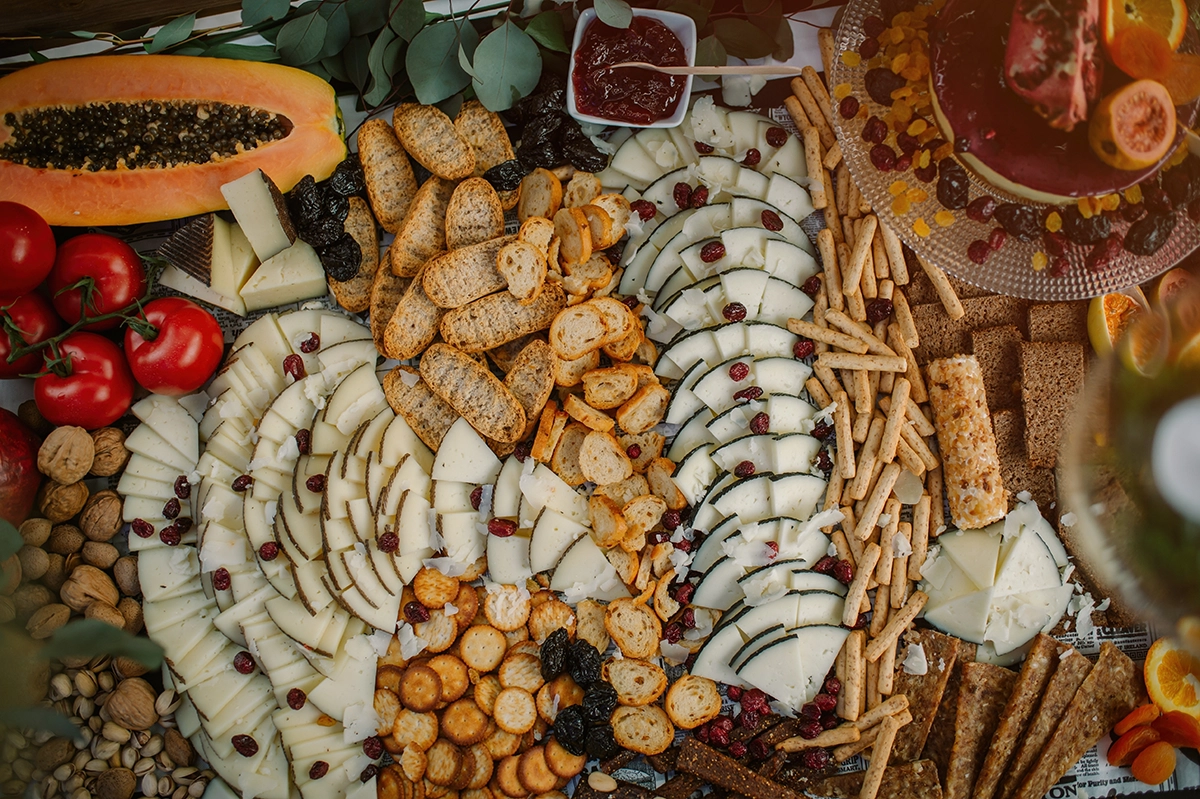
A beautifully designed grazing installation is not simply a food offering. It is a room unto itself.
The most striking spreads are conceived in genuine creative partnership with florists and event designers — incorporating living botanicals, varied architectural heights, rich textural contrast, and color palettes that echo the wedding's broader aesthetic.
Dessert walls lined with hand-piped macarons or glazed confections serve the same visual and experiential purpose: interactive, photogenic, and possessed of a sense of occasion.
Artisan gelato carts, gilded churro stations, composed dessert shooters — these are the refined punctuation marks of a flawless reception.
And a well-timed late-night moment, whether it arrives as a grilled cheese station or a returning taco bar, has a singular ability to reunite a room.
Catering Styles Explained: Which Format Is Right for Your Wedding?
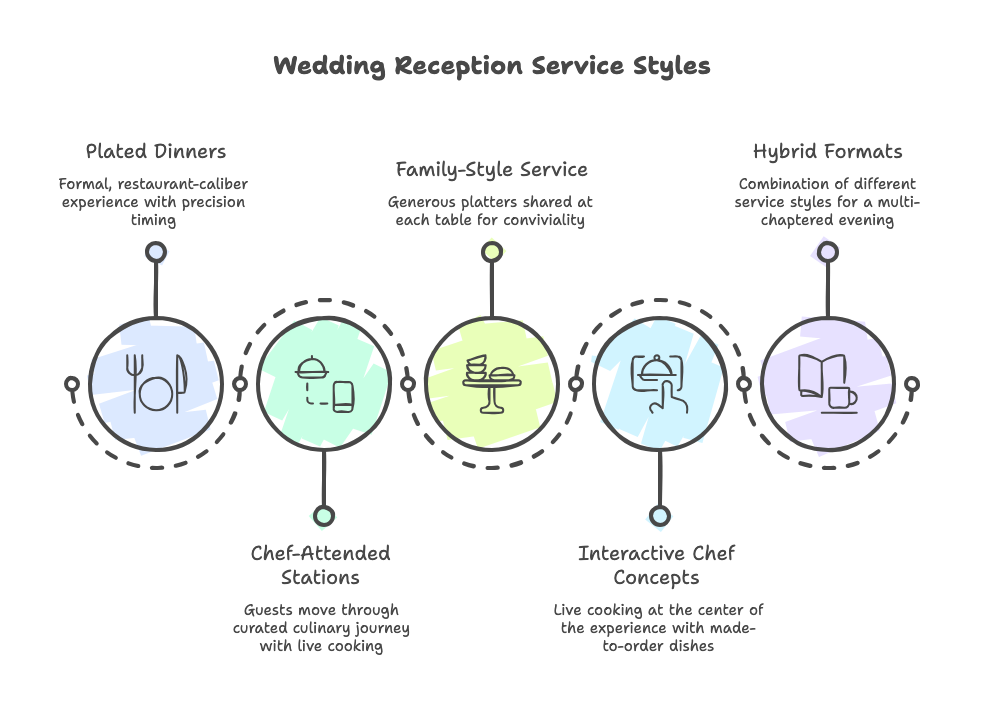
The service style chosen for a reception shapes everything — the atmosphere of the room, the rhythm of the evening, the staffing choreography behind the scenes, and ultimately the experience guests carry home. The principal formats each offer something distinct:
- Plated dinners deliver a formal, restaurant-caliber experience — individually composed courses, precision timing, and white-glove service. The gold standard for black-tie and chef-driven celebrations.
- Chef-attended stations have replaced the traditional buffet at the finest events. Guests move through a curated culinary journey — a carving station, a handmade pasta bar, a globally inspired concept — with live cooking adding both theater and warmth.
- Family-style service brings generous, beautifully composed platters to each table for guests to share. It balances formality with conviviality and creates a natural intimacy between guests.
- Interactive chef concepts place live cooking at the center of the experience. Made-to-order pasta, tableside sushi, a composed poke station — dining and entertainment become indistinguishable.
- Hybrid formats are increasingly the signature of the most considered receptions: a plated dinner for the main event, a flowing dessert experience to follow, a roaming cart or curated late-night station as the evening's final flourish. The night unfolds in chapters, each one distinct.
The right format is the one that serves the atmosphere a couple is creating. There is no universal answer — only the one that fits.
Wedding Catering Costs in 2026: What Couples Should Expect
The Real Numbers
Honest budget conversations are among the most valuable a couple can have early in the planning process.
The average U.S. wedding in 2026 carries a total investment in the range of $30,000–$35,000, with catering consistently representing one of the most significant allocations.
National averages place catering spend at $8,000–$12,000, though luxury market celebrations — particularly in destinations like Scottsdale — regularly and appropriately exceed that range.
Dessert and cake budgets are typically separate, running $800–$2,000 depending on the vision.
Guest Count Is the Most Powerful Variable
Per-person pricing in the Scottsdale luxury market generally ranges from $125 to $250 or more, depending on service style, menu complexity, and staffing architecture.
The arithmetic is elegant in its clarity: a more intimate guest list means greater investment per person, which translates directly into a more elevated experience for every individual in the room.
Couples who have made the decision to prioritize quality over scale frequently reflect on it as one of the best choices of the entire planning process.
The food was exceptional. The evening felt personal. Every guest felt genuinely hosted rather than accommodated.
Balancing Inspiration with Investment
The world of wedding inspiration — curated, beautiful, and abundant — has made it both easier and more challenging to approach budget conversations clearly.
The grazing installations, the raw bars, the cascading dessert architecture — they are real, and they are absolutely achievable.
The key is identifying two or three signature moments that matter most, directing investment toward those with intention, and trusting an experienced catering partner to build a cohesive, exceptional menu around them.
A truly skilled caterer doesn't simply execute a vision. They help refine and elevate it.
Guest Experience & Inclusivity in 2026 Weddings
Designing a Culinary Arc Across the Entire Weekend
The most thoughtful hosts in 2026 are not planning a single meal. They are designing a weekend.
A welcome gathering with refined small plates and craft cocktails establishes the tone. A rehearsal dinner with an intimate, personal menu draws the inner circle close.
The reception itself is the main event — the full expression of the couple's culinary vision.
A post-wedding brunch is the warm, unhurried coda.
When these moments are designed with a cohesive thread running through them, the entire weekend feels like a single, beautifully considered act of hospitality.
Inclusivity as the Highest Form of Hospitality
Every guest at the table deserves to feel as though the menu was made with them specifically in mind.
That means thoughtful labeling. It means plant-based and allergen-conscious dishes that are genuinely, memorably delicious — not quietly apologetic.
It means honoring the culinary traditions of multicultural families with the same care and craft applied to every other element of the menu.
When inclusivity is executed at this level, it isn't perceived as accommodation. It is simply experienced as exceptional care.
Sustainability, Locality & Responsible Catering
Couples planning luxury weddings in Arizona are arriving at initial conversations with these questions already formed:
Where does the food come from?
Is it seasonal?
How is waste managed?
What is the sourcing philosophy?
These are precisely the right questions.
In 2026, sustainable catering practice is not a premium distinction — it is an expected foundation.
Sourcing from local Arizona farms, independent ranchers, and regional artisan producers means ingredients of demonstrably higher quality, a meaningfully reduced environmental footprint, and a meal that is authentically connected to the landscape in which it is being celebrated.
At Tableside Gourmet, local sourcing relationships are not a service tier. They are simply how great menus are built.
Presentation & Design: When Food Becomes Décor
At the highest level of wedding catering, the boundary between food and event design ceases to exist entirely.
A composed grazing installation is not a food station — it is an architectural moment within the room.
A dessert display can be color-directed to complement the floral palette exactly.
A raw bar, staged with hand-chipped ice, fresh botanicals, and considered lighting, becomes a sculptural focal point that anchors the space.
Achieving this quality of integration requires genuine creative collaboration between the caterer, the event planner, the floral designer, and the rental team — all working from a unified vision.
When that alignment is achieved, every edible element and every decorative one tells the same story, and the reception feels complete in a way that is immediately felt, if not always consciously identified.
How to Choose the Right Wedding Catering Approach for Your Event
Begin with the feeling, not the menu.
The most useful question a couple can ask at the start of the catering conversation is simply:
What do we want our guests to feel?
Formal and refined? Warm and communal? Dynamic and full of energy?
The answer shapes every decision that follows — service style, menu direction, presentation aesthetic, staffing approach. From there, the guest list comes into focus: the range of backgrounds around the table, the dietary needs to be honored, the cultural traditions worth celebrating.
The venue's character and constraints inform what is possible. And the full weekend of hosting — not just the reception — deserves to be considered as a single, cohesive culinary arc.
The right catering partner will ask all of these questions before a single dish is discussed. Because the finest wedding menus are not written in a kitchen.
They are drawn out of a conversation — one that begins with who the couple is and what they want the people they love to experience.
Begin Your Culinary Vision with Tableside Gourmet
For couples who believe that exceptional food is one of the most meaningful gifts they can offer their guests, the planning process deserves a partner who shares that conviction.
Tableside Gourmet works with couples across Scottsdale and the greater Arizona area to design bespoke catering experiences — menus that are personal, precise, and built to be remembered.
Whether the vision is a dramatic raw bar at golden hour, an intimate plated dinner, or a late-night street food moment that brings the entire celebration back to life, the process begins with a single conversation.
Frequently Asked Questions About Wedding Catering in 2026
1. When should we book our wedding caterer for 2026?
Most couples book their caterer 9–14 months in advance, especially for high-demand spring and fall dates. Sought-after catering teams often accept a limited number of full-scale events per weekend. Booking early gives you time for tastings, thoughtful menu development, and seamless coordination with your planner and venue team.
2. How do we choose which food trends to include?
Instead of incorporating every trend, select two or three standout culinary moments that align with your vision and guest experience. That could mean an elevated raw bar at cocktail hour, an interactive chef station during dinner, or a memorable late-night offering. The goal is intention — not excess.
3. Can we fully customize our menu?
Yes. In the luxury market, menus are typically curated collaboratively rather than chosen from rigid packages. Your caterer will tailor dishes based on seasonality, venue logistics, guest count, and service style. Customization works best when guided by expertise to ensure flawless execution for a large guest list.
4. How are dietary restrictions handled?
Modern caterers integrate dietary accommodations into the planning process from the beginning. Guest meal tracking, coordinated service, and clear preparation protocols ensure specialty meals are delivered smoothly and discreetly. When managed well, accommodations feel seamless and never interrupt the flow of the evening.
5. What defines luxury wedding catering?
Luxury catering is defined by experience as much as cuisine. Beyond premium ingredients, it includes refined presentation, attentive staffing ratios, precise timing, and polished service choreography. Every course is designed to enhance the atmosphere and leave guests remembering how the evening felt — not just what was served.