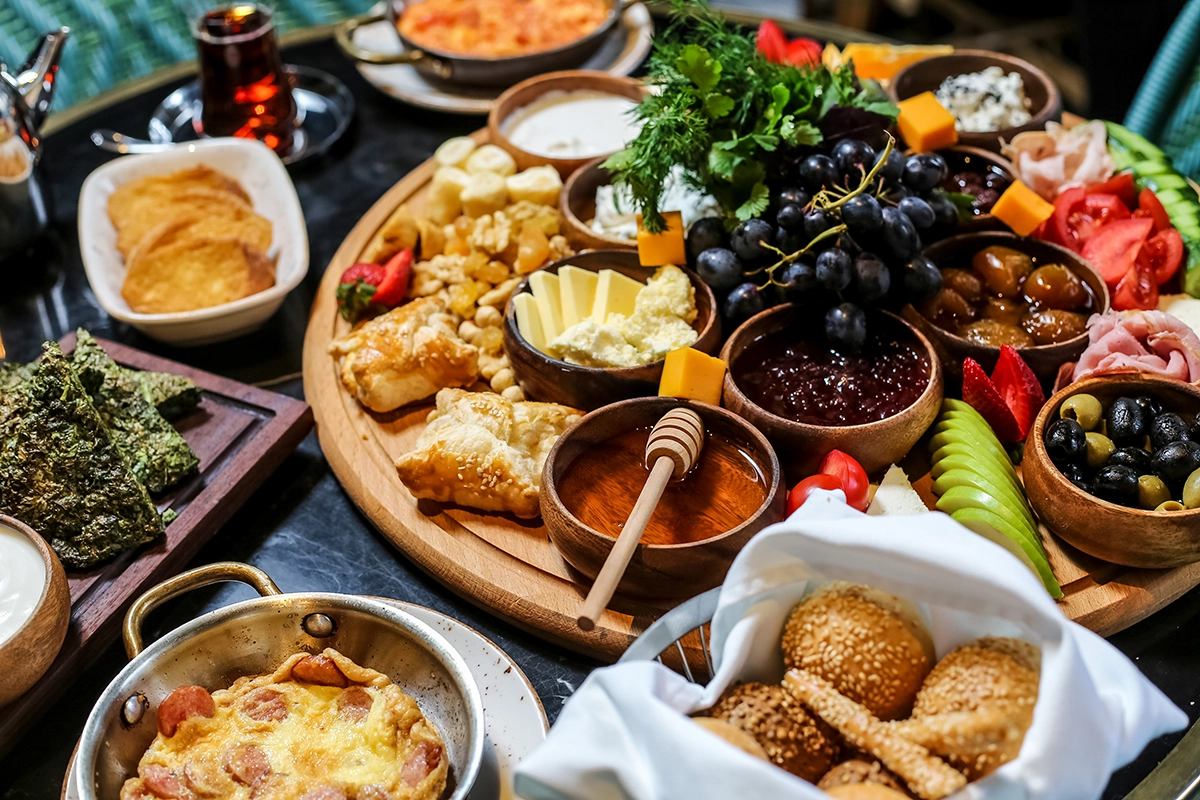
Table Of Contents
Fall Event Catering in Scottsdale: What to Serve and When to Book
It's a Saturday in mid-October. Four in the afternoon. Someone has set a beautiful cheese board on the patio, and by the time the third guest arrives, the brie has surrendered. Everyone drifts inside, and the party relocates to the kitchen island.
The host did nothing wrong. The calendar was the problem.
Fall in Scottsdale doesn't behave the way fall behaves anywhere else. It arrives late, leaves fast, and lands squarely on the busiest entertaining stretch of the year. Once you understand that rhythm, everything else falls into place — here's how we think about it after years of catering events across Scottsdale.
Fall in Scottsdale Is Eight Weeks Long — and It Doesn't Start in September
According to NOAA's 1991–2020 climate normals, September in Scottsdale averages a high of 98°F. October drops to 87°F. November lands at 75°F, and December settles into the mid-60s.
But averages hide the detail that matters. In an average October, Scottsdale sees fourteen days at or above 90 degrees. In November, that number drops to one.
Read those two numbers together and the season redraws itself. Half of October is still summer in every way that affects a party. The real outdoor entertaining window opens around the first of November and runs through the new year.
That's eight weeks — and they're the same weeks that hold every corporate holiday party, Thanksgiving table, and welcome-back dinner as seasonal residents return. Short and crowded.
What This Means for October Events
October isn't a write-off. It's an evening month.
Scottsdale averages twenty-one October nights that stay above 60 degrees — the most reliably comfortable outdoor evenings on the calendar. Nobody needs a heater or a wrap.
October gatherings work beautifully after five o'clock. Before then, plan for shade, indoors, or a covered patio with real airflow.
Plan Around the Sun, Not the Clock
Arizona doesn't observe daylight saving time, and that quietly reshapes fall entertaining here.
Elsewhere, the November clock change drops sunset by an hour overnight. Here the light just drifts, reaching its earliest point of the year at about 5:20 p.m. in early December — a couple of weeks before the solstice.
That's earlier than most hosts expect. A six o'clock cocktail hour in December is a night event, fully dark, with no golden hour to lean on. Lighting stops being decor and becomes part of how the food reads.
The Desert's Twenty-Four-Degree Drop
A typical Scottsdale November day runs a high of 75°F and a low of 51°F. That's a twenty-four-degree swing, and most of it happens after sunset.
Guests who arrived in linen at four are genuinely cold by seven, and the fix is almost always culinary rather than logistical. Something warm should arrive as the temperature falls — a soup course passed in small cups, a hot station that opens after dark, coffee and dessert timed to the moment people reach for their jackets.
Fire features help. But a warm bite handed to someone at the right moment does more, and it feels like hospitality instead of equipment.
The Desert Harvest Runs Backward, and That's Good News
Most fall menus circulating online were written for New England.
Arizona's low desert runs on an inverted calendar. Winters here are mild enough to grow through, so the region produces cool-season crops and citrus from fall into early spring, then goes quiet through the deepest summer heat — the reverse of the national pattern.
Fall isn't when the Arizona larder empties. It's when it fills.
What's Peaking, November into December
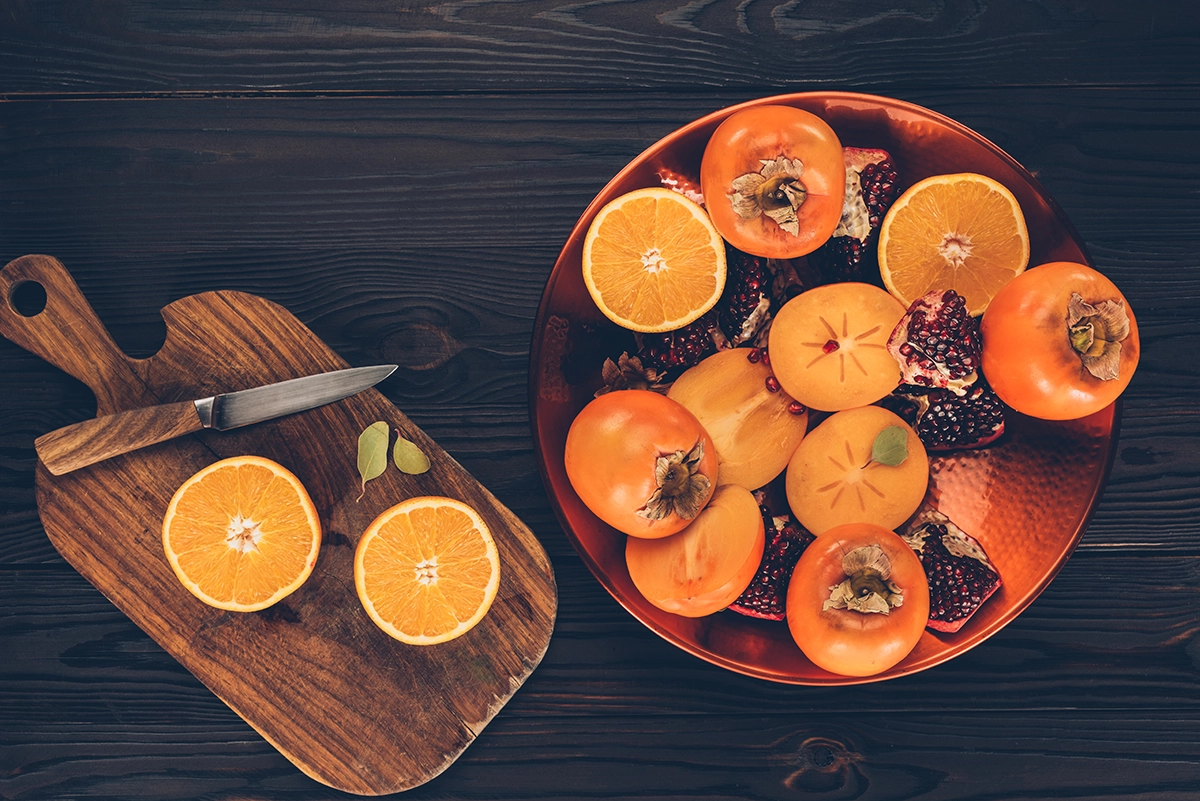
Pomegranates come into their own, and their color does more for a fall table than any amount of styling. Persimmons arrive. Dates are at their best. Early citrus begins ripening through November, months ahead of when the rest of the country expects it. Cool-season vegetables hit their stride — Brussels sprouts, brassicas, sweet potatoes, root vegetables, and the leafy greens this region grows for the entire nation. Arizona pecans are harvested in late fall, which is Thanksgiving timing that writes its own dessert course.
Then there's the regional pantry most fall menus ignore: mesquite, chiltepin, prickly pear, tepary beans. Not novelties — what this landscape has produced for centuries, and they read as autumn without borrowing anyone else's.
The National Restaurant Association named local sourcing the number one overall trend for 2026. Most of the country has to work at that in November. Here, it's the easiest thing to do.
What Guests Actually Want to Eat This Year
The National Restaurant Association surveyed hundreds of culinary professionals for its 2026 What's Hot Culinary Forecast, and the headline finding wasn't a new technique. It was comfort.
Comfort foods ranked second overall, behind only local sourcing; global comfort foods landed seventh. Chief economist Dr. Chad Moutray summarized the year this way: "Comfort and value are the twin pillars shaping America's menus right now."
For a luxury client, that's easy to misread. It is not an argument for casual food.
It's an argument for familiar food executed at a level guests can't reproduce at home. A short rib that tastes like a memory but has real technique behind it. A squash soup that isn't beige. A pecan dessert that earns its place instead of occupying it.
The most common way hosts overreach is by adding components — twelve small plates pulling in different directions, and nothing anyone remembers on the drive home. Fewer dishes, executed deeply, land harder every time.
Build a Beverage Program, Not a Bar
Gallup found the share of American adults who drink alcohol fell to a record low of 54% in 2025, down from 62% two years earlier.
The framing that matters: NielsenIQ reports 92% of non-alcoholic beverage buyers also purchase alcohol. This isn't a story about people quitting — it's about people no longer accepting club soda with a lime as the entire alternative. Zero-proof spirits and mocktails are the fastest-growing corner of the category, up roughly 70% year over year, and households earning $100,000 or more drive over 80% of that growth.
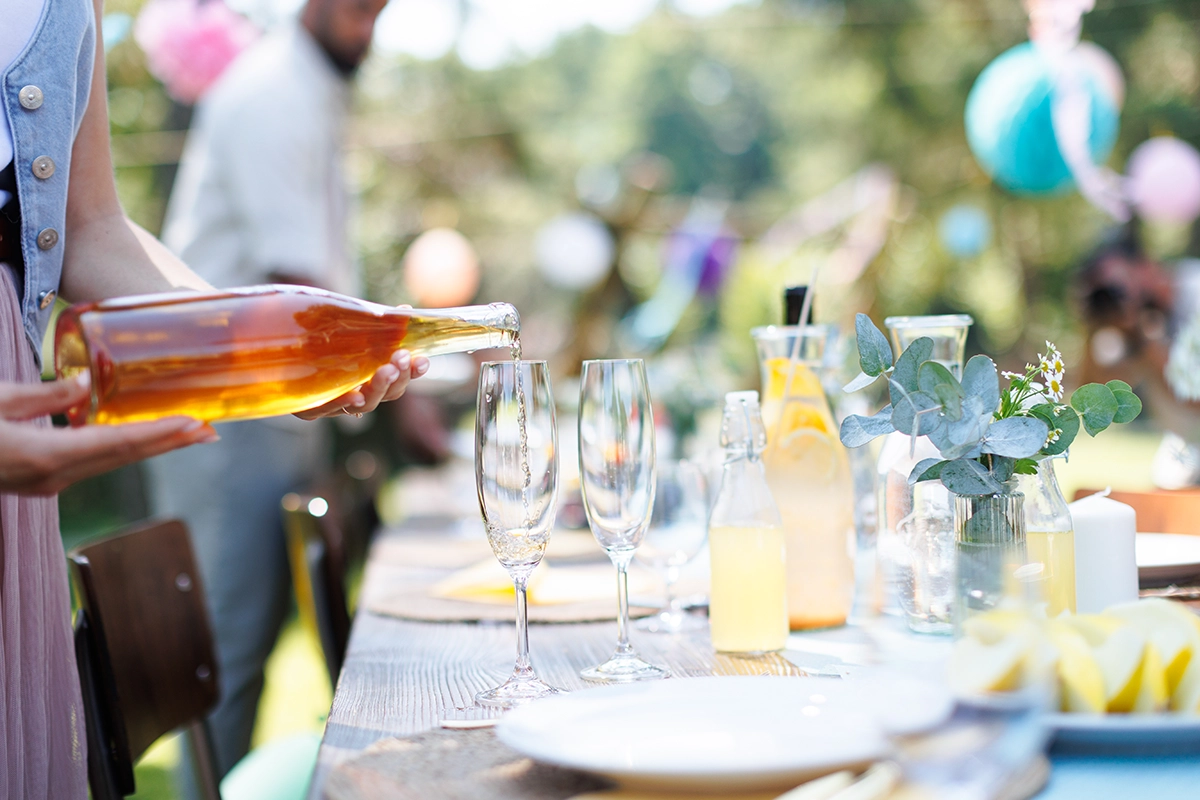
The efficient approach is one flavor architecture serving both versions of a drink. Local citrus, pomegranate, warm baking spice, a note of smoke — these work with spirits and without them. Design the flavor first, then decide which guests get which base. Nobody's drink announces itself as the compromise.
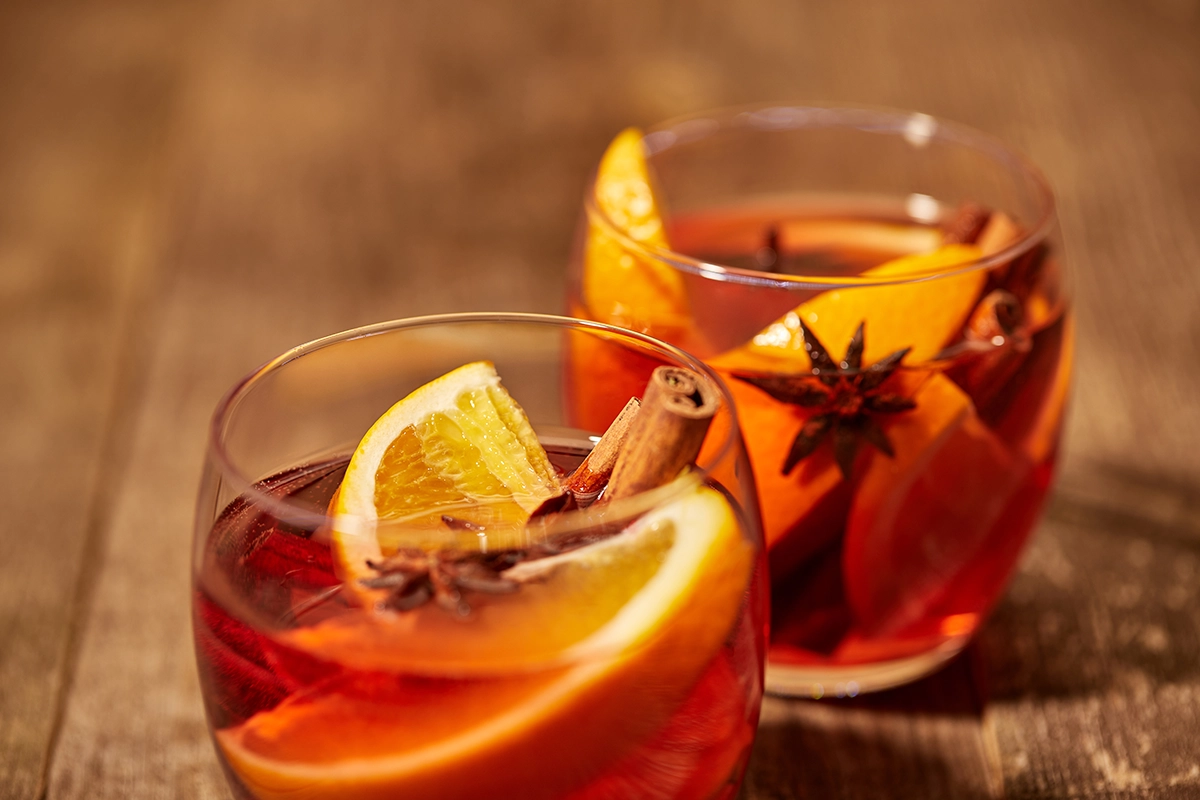
Passed drinks and hors d'oeuvres at arrival remain the fastest way to set the tone before anyone has found a seat.
Choose the Format Before You Choose the Menu
Service style is usually treated as a budget decision. It's really a decision about movement and conversation, and it shapes how a night feels before anyone tastes anything.
Plated service keeps guests seated and holds the timeline. If there are toasts or a program, it earns its cost.
Buffet service reads relaxed and generous, and handles dietary variety gracefully because guests build their own plates. A well-designed buffet can be every bit as elegant as plated — the difference is layout, presentation, and staff keeping it immaculate.
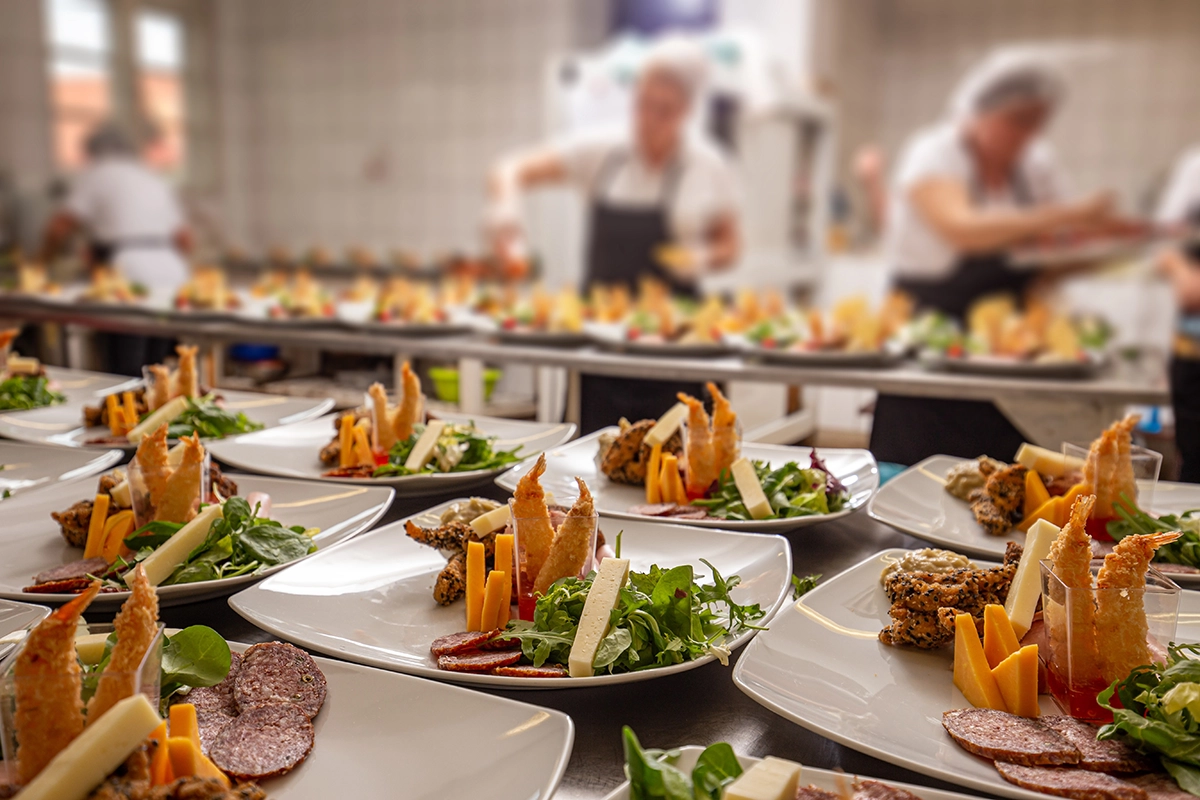
Stations create continuous movement and multiple social anchor points. They also need the most floor space and are the most staff-intensive format here. Stations look effortless precisely because a lot of people are working.
Family-style is the warmest option available and remains underused for fall.
What the Desert Adds to the Decision
Wind takes napkins, garnishes, and heat off an open patio. Dust is real. And an uncovered buffet in the desert has a shorter safe service life than the same buffet in a ballroom — which is why we lean toward covered or attended service outdoors far more often here.
The upside: Scottsdale homes and venues are built for indoor-outdoor flow in a way few places are. Design the menu to cross that threshold with the guests, rather than stranding half of it on the wrong side of a door.
Make the Food Part of the Evening
American Express Global Business Travel's 2026 Global Meetings & Events Forecast asked planners to name their top priority for the year. The answer wasn't cost.
Improving the attendee experience came first, at 33% — ahead of reducing costs at 30%. The same research found 42% of attendees prefer hands-on formats and 40% prioritize opportunities to socialize.
There's a human reason behind those numbers. Research on workplace holiday parties found that while 96% of employees look forward to celebrating, nearly half still feel anxious about attending — uncertainty about the food and not knowing many colleagues among the reasons.
A station solves that. It gives people somewhere to stand, something to watch, and something obvious to discuss with a near-stranger. That's not a culinary benefit. It's a social one.
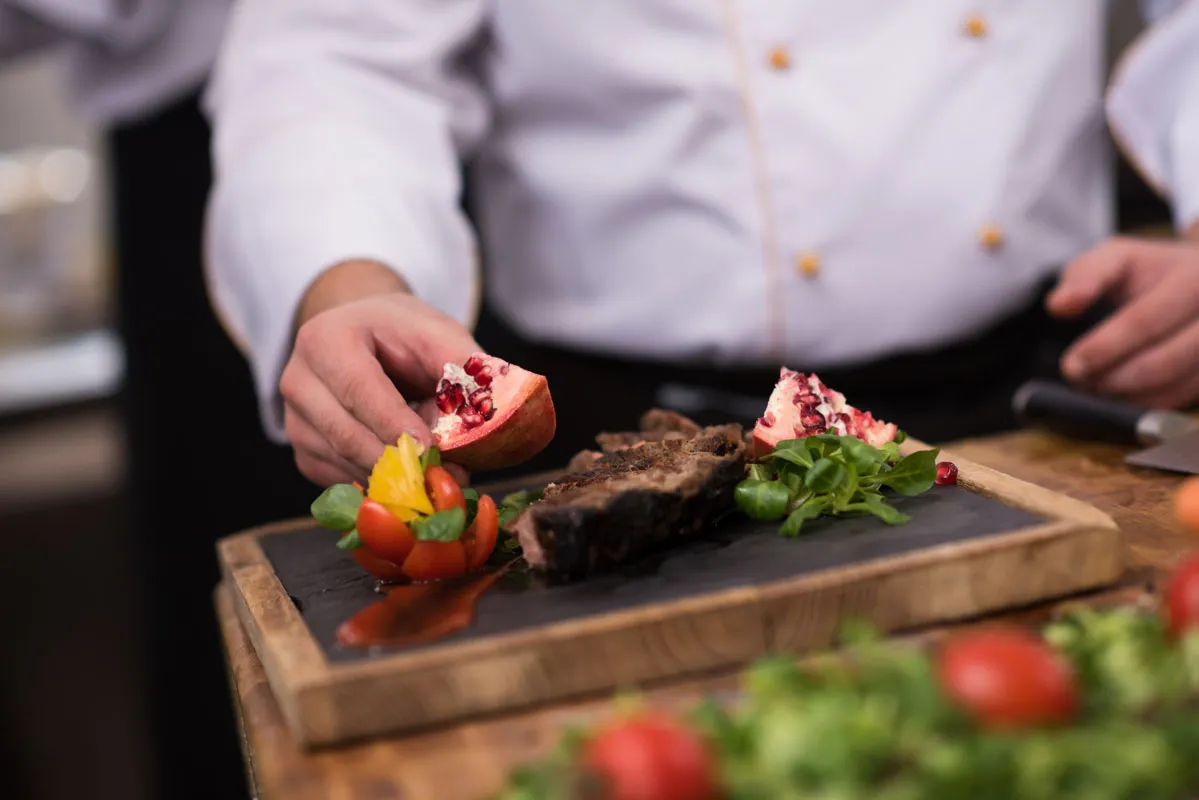
Four that work in fall: a chef-attended carving station, still the most reliable gathering point in any room; a composed salad station built on pomegranate and early citrus, delivering the color fall menus usually lack; live-fire or mesquite-grilled elements, where the heat becomes part of the hospitality; and a dessert moment built on Arizona pecans and dates.
Feed Everyone at the Table
At a gathering of fifty adults, roughly five have a food allergy. The host usually doesn't know which five.
FARE's National Indicator Report on Food Allergy, released in February 2026 with CDC support, found food allergy affects more than 33 million Americans — about one in ten adults.
The detail most hosts have never encountered: nearly half of American adults with a food allergy developed at least one during adulthood, and 21% say all of theirs began after age eighteen. The friend who ate everything at your table three years ago may not be able to now.
The instinct is to build a separate plate for that guest. We'd gently push back, because it does the one thing hospitality shouldn't — it singles someone out in a room full of people. Better to design menus where most dishes work for most guests from the outset, then label clearly so nobody has to ask. The National Restaurant Association ranked menu labeling fifth and allergen-friendly menus sixth among all 2026 trends.
Fall menus suit this unusually well. The work is mostly in knowing early.
Five Fall Occasions, and What Each One Needs
According to the City of Scottsdale's own tourism study, attending a celebration ranks third among all visitor activities — behind only shopping and sightseeing, ahead of hiking, museums, and golf. People come here to gather.
The Corporate Holiday Party
Roughly 64% of American companies host a holiday celebration, according to Challenger, Gray & Christmas. What's changed is where. Companies have shed office space, teams are distributed, and the celebration has moved off-site — Challenger's own analysts tie the shift to physical space that's no longer adequate to host a party, and to a real desire to bring remote teams back into a room. That shift is the whole story behind corporate catering in Scottsdale and holiday party catering.
Thanksgiving, Hosted Properly
The American Farm Bureau Federation found the West carries the highest Thanksgiving grocery costs in the country — about $61.75 for a classic meal for ten, against $50.01 in the South.
We'll be honest about the other side: Deloitte found consumers' willingness to pay extra for hosting convenience actually dropped 23 percentage points in 2025. Catering has to earn the booking on outcome, not ease. Where it genuinely does — large tables, complex dietary needs, and the host who'd rather be present than in the kitchen for six hours — is the case for Thanksgiving catering in Scottsdale. It isn't a case for everyone.
The In-Home Dinner Party
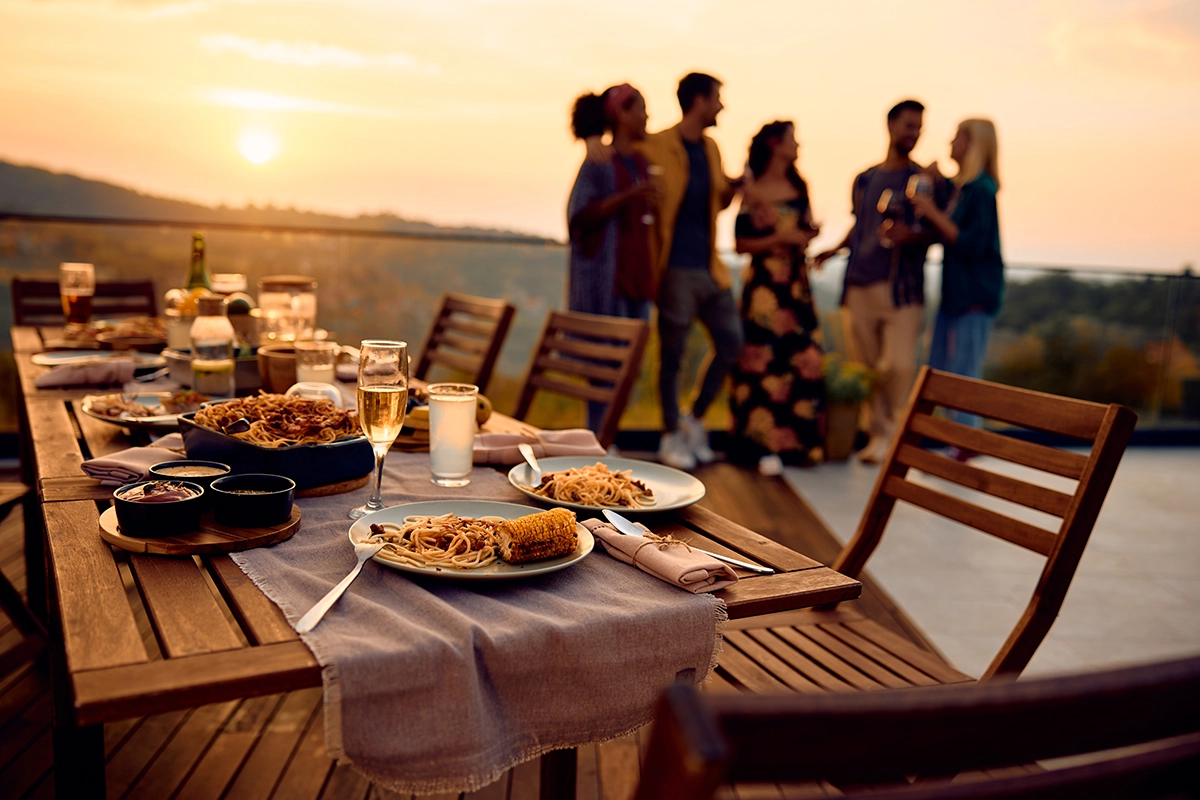
The most distinctly Scottsdale format there is. A courtyard, a November evening at exactly the right temperature, six people, a chef working a few feet away. An in-home dining experience trades scale for something scale can't buy.
Client Appreciation and Year-End Gatherings
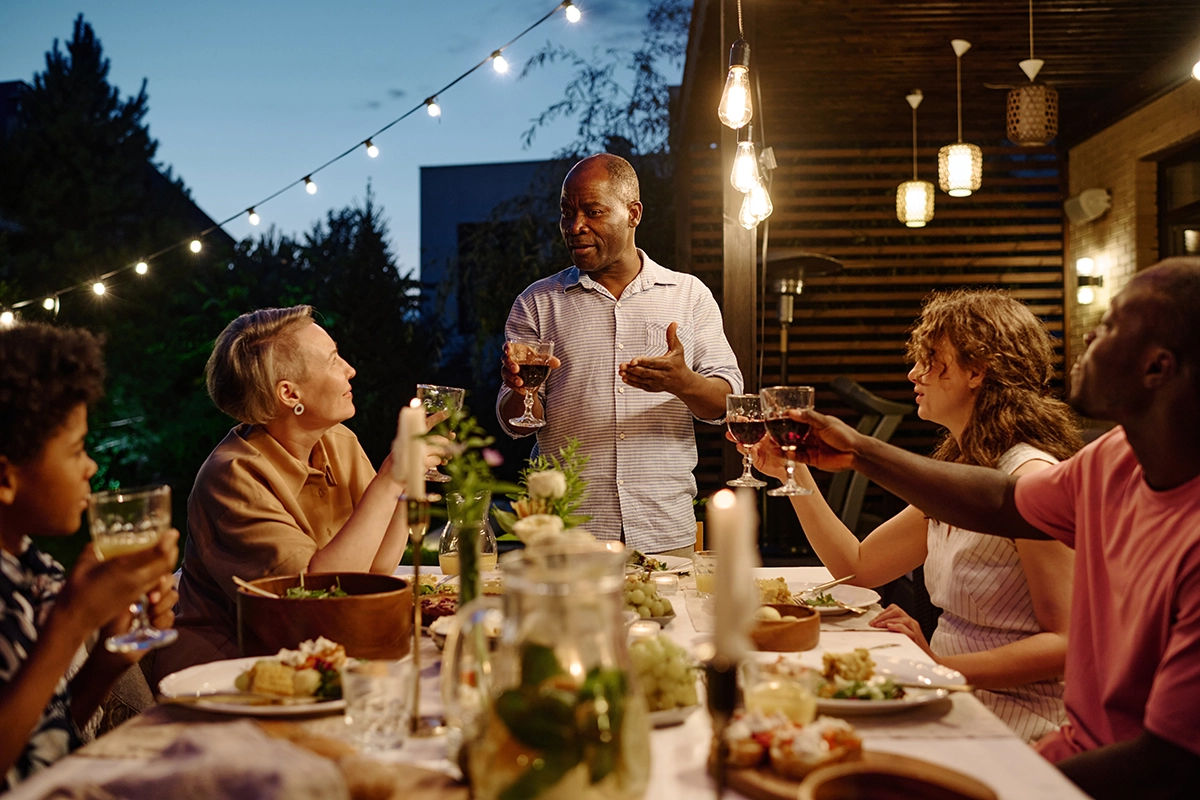
A different animal from the staff party. Fewer people, higher stakes, conversation as the entire point. Passed service or a seated dinner, in a room quiet enough that people can hear each other.
Milestone and Seasonal-Resident Celebrations
Birthdays, anniversaries, and the welcome-back dinners that fill November. Scottsdale's median age is 47.7, well above the Phoenix metro's 38.3, so multigenerational tables are the norm. Menus need something for a nine-year-old and something for a sommelier.
What Separates a Good Fall Event from a Stressful One
Book Earlier Than Feels Necessary
Eight weeks of demand against fixed kitchen capacity produces what you'd expect. The most requested dates of the year — the second and third weeks of December, Thursday and Friday especially — book ten to fourteen weeks out.
For a December event, start conversations in late summer. For Thanksgiving, earlier still. And flexibility is leverage: moving a party by a single week frequently transforms what's available.
The Food Safety Rule That's Different Here
The FDA and USDA are unambiguous. Perishable food shouldn't sit between 40°F and 140°F for more than two hours — or more than one hour when the air temperature is above 90 degrees.
Now recall that Scottsdale averages fourteen October days at or above 90°F.
An October afternoon event here can legitimately fall under the one-hour rule rather than the two-hour rule. That's not a scare tactic; it's arithmetic, and it's the most underappreciated fact about outdoor entertaining in the desert. It's why hot food has to hold at 140°F or above and cold food at 40°F or below — and why that takes real equipment and attended service.
Quantities and Staffing, Honestly
For a reception with no meal, most planning guides land somewhere between six and eight bites per guest for a late-afternoon or evening event — fewer when dinner follows within the hour. University event-services standards suggest about one server per twenty to twenty-five guests for plated service, and one bartender per seventy-five at a hosted bar. Buffets need noticeably more total food than plated for the same headcount, which surprises hosts who choose buffet expecting savings.
The three things hosts underestimate most consistently: staff, ice, and lighting. In that order.
Let's Plan Your Fall Gathering in Scottsdale
The season here is short, generous, and busier than it looks. Whether it's a company celebration, a Thanksgiving table, or a dinner for twelve on the patio, the earlier the conversation starts, the more of that window is still yours.
Explore our full catering services in Scottsdale, or get in touch and tell us what you're imagining.
Tableside Gourmet is a luxury catering company serving Scottsdale, Paradise Valley, and the greater Phoenix area.
Frequently Asked Questions
What actually drives the cost of catering a fall event?
Less than most people expect goes to ingredients. The larger variables are service style, staffing, and duration — a four-hour reception costs meaningfully more to staff than a two-hour one with an identical menu. Rentals matter too, and outdoor fall events here often need heaters, lighting, and power that indoor events don't.
Do you need to use my kitchen for an in-home dinner?
Rarely in the way people imagine. Most cooking happens off-site, and what a chef needs on location is closer to staging space than a working kitchen — counter room, water access, a couple of outlets. Older Scottsdale homes sometimes offer less usable kitchen space than a newer patio does, which is why we walk the space before finalizing a menu.
When do I need to give a final guest count?
Most caterers need a firm number about a week out, with small adjustments possible after. Fall complicates it: holiday RSVPs run later and less reliably, and out-of-town guests confirm travel late. Build the buffer into your invitation timeline rather than your headcount — asking for RSVPs two weeks earlier than feels necessary costs nothing.
Are there rules I should check before hosting at home in Scottsdale?
Worth a phone call before you commit to a date. Many Scottsdale and Paradise Valley communities have HOA rules covering amplified sound, end times, guest parking, and vendor access, enforced more actively through the busy fall and winter months. If you're using a resort or private venue, ask early whether outside catering is permitted — several properties restrict it or charge a fee.
What happens to the leftovers?
More than people expect, especially from a buffet. Some can go home safely and some can't — anything that's been in open service falls under the same time-and-temperature limits above, and in warm weather that window is short. Decide in advance: ask your caterer to package portions from the kitchen rather than rescuing platters at the end of the night.