Table Of Contents
Why the Best Scottsdale Offices Are Building Their Week Around Lunch
The plated three-course lunch was beautiful. It was also still underway at 1:40 pm, even though the meeting was scheduled to end at 1:00 pm. The client had a flight to catch. No one reached the conversation that actually mattered.
A few miles away, another office had ordered sandwich trays for a prospect who had flown in from Chicago that morning specifically to meet them.
In both rooms, no one complained about the food. It was good. It just wasn't right for what the room needed to accomplish.
The Lunch That Was Fine, and Wrong
Ask around any Scottsdale office and you'll hear versions of the same two stories.
There's the lunch that was too much. Someone wanted to impress, so they ordered up: multiple courses, staff, a menu that required explanation. What arrived was genuinely impressive—and it swallowed the meeting. The room spent more energy managing plates than advancing the conversation.
Then there's the lunch that was too little. A team prepared for weeks, brought in the right people, and served them from a tray that could have come from any Tuesday. The prospect noticed—not because they expected extravagance, but because the meal was the one part of the day that didn't seem considered.
In neither case was the food bad. Office lunch almost never fails on quality. It fails on fit.
Most of the time, that's because the decision starts with the wrong questions: how many people, and how much can we spend? Both are necessary, but neither reveals what the meal is supposed to achieve. A budget doesn't know whether you're welcoming a new hire or closing a deal. Headcount doesn't know if the room needs forty minutes or ninety.
The better first question is: What is this lunch supposed to do? Once you answer that, everything else follows.
What follows is a guide to the occasions that arise most often—client meetings, first days, board sessions, all-hands, and weekly team lunches—and what each one truly needs. For larger events like launches and executive retreats, we've covered broader corporate catering trends separately.
What Lunch Is Actually Doing in the Room
Four elements are always at play, and every occasion weighs them differently:
- Attention: Some formats let people focus on each other; others pull focus toward the food. A dish that needs cutting, explaining, or a trip to a station costs attention.
- Time: Service format often dictates meeting length more than the agenda does. Plated courses run long by design. Boxed lunches run short. A buffet for thirty takes as long as the line allows.
- Signal: Every meal communicates how much the gathering matters—not through sheer expense, but through evidence of thought. A simple lunch chosen carefully can signal more than an elaborate one chosen by default.
- Friction: How much does the meal interrupt the real work? Sometimes the pause is the point. Often it isn't.
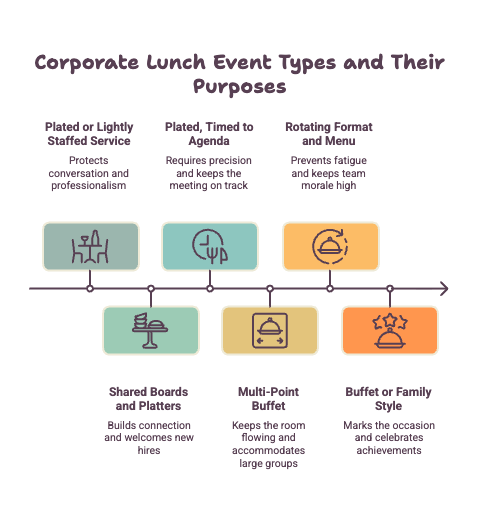
Why format matters more than menu
The same ingredients behave differently depending on service. Chicken with grain salad and roasted vegetables can be a relaxed forty-minute seated meal when plated, a fifteen-minute scramble on a buffet, a portable option when boxed, or a standing conversation when passed as small plates. Same food, four different meetings.
Format shapes the room. It's also the decision people spend the least time on, often defaulting to whatever they ordered last time. Get the format right first, then choose the food.
The Client Meeting
What this lunch is for
A client lunch has one job: build the relationship. It isn't a budget demonstration. The meal simply gives two groups a reason to sit together long enough to talk.
The most common mistake is overcorrecting. When stakes feel high, the instinct is to order up. But a meal that demands attention pulls it away from the person across the table—the entire reason for the meeting.
Getting the format right
For small groups, plated or lightly staffed service is nearly always best. Everyone is served at once. No queues. No one gets up. Our sit-down plated menu is built for this: controlled timing, clean presentation, nothing that requires production.
Self-serve formats are best avoided. A buffet halts conversation and creates awkward hierarchy—who goes first, who waits, who stands while others sit. In a room meant for equal footing, those small frictions matter.
For shorter windows, passed hors d'oeuvres work beautifully, keeping people mobile and conversation flowing. Our hot and cold hors d'oeuvres menu covers this range.
The afternoon problem
Heavy midday food can cost you the second half of the day. A rich lunch leaves people physically present but mentally checked out by 2:30 pm.
Opt for lighter proteins, composed plates rather than piled ones, and bright preparations over heavy sauces. Restraint reads as confidence and keeps everyone sharp.
One sequencing tip: handle substantive discussion first, then serve. A room that has already had the hard conversation eats differently than one still waiting for it.
Day One: The Onboarding Lunch
Why the first-day lunch matters more than it looks
Serious onboarding programs treat the first-day meal as structural, not optional. A new hire's day is filled with paperwork, logins, and introductions to people whose names won't stick. Lunch is often the only unstructured moment.
Failure modes are specific. Eating alone on day one is memorable for the wrong reasons. Almost as bad is the surprise meal no one mentioned, leaving the new person to bring their own food or scramble for plans.
The real purpose is converting names into people. Someone who has shared a meal with the team forms a different relationship than someone who has only been introduced.
Formats that make people talk
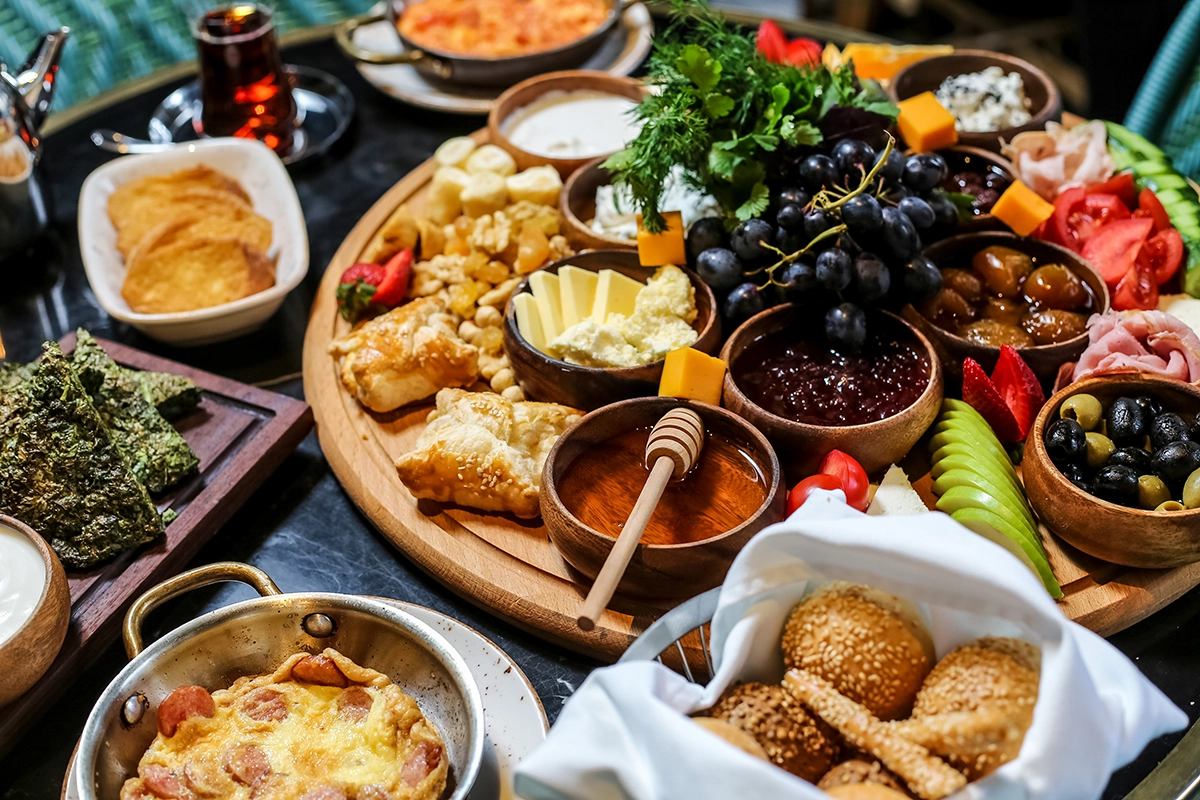
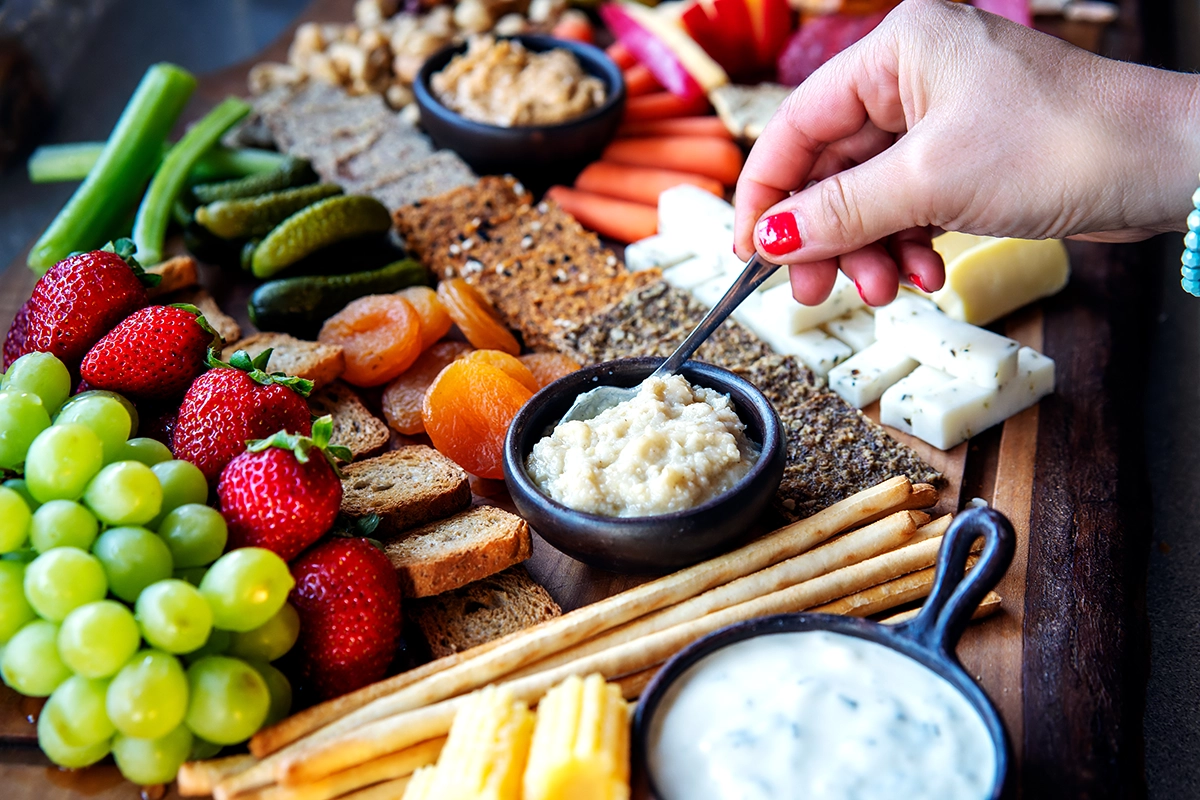
Shared formats win here, even though individual ones are easier. Boards and platters create natural movement—reaching, passing, commenting on what's good. That low-stakes activity gives people something to do with their hands and an easy conversation starter when no one knows each other well. Our platters and boards menu supports grazing, while family-style service does the same at the table.
Boxed meals are efficient but isolating—the opposite of the goal.
The detail most people miss
Ask about dietary needs before day one, not at the table. This highest-leverage move costs nothing. A new hire should never have to announce restrictions in front of people they just met. Include the question in pre-start paperwork, then quietly ensure appealing options are already on the table—no substitute plates, just food that fits seamlessly.
The Board Lunch, Not the Board Dinner
Different rules than an evening event
Board dinners can be events. Board lunches are working meetings that happen to include food.
Evening investor gatherings may feature tasting menus or chef presence. At midday, none of that fits. This room has an agenda, a clock, and people who flew in for it. Success means no one remembers the food afterward.
Precision over presentation
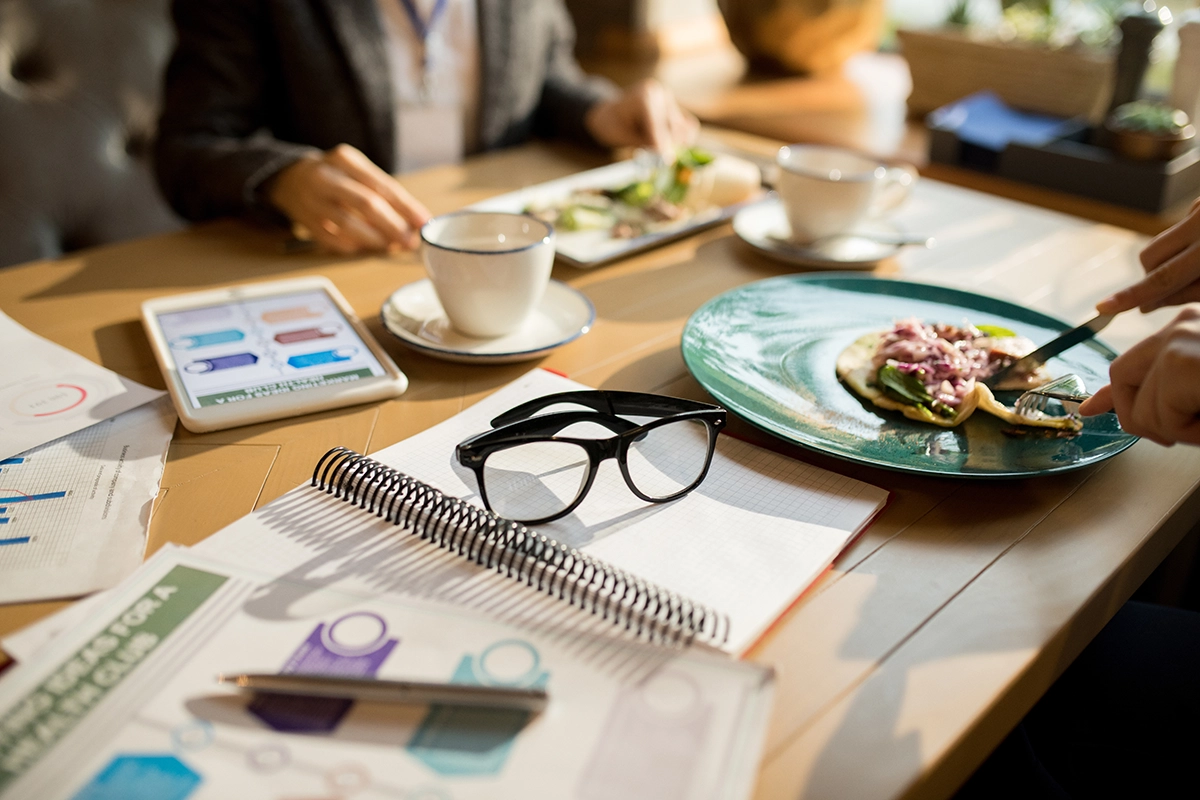
Plated service timed to the agenda, not the reverse. Every plate arrives together—no staggered eating, no half the table waiting. One clean pause, then back to work.
Staffing should be present yet invisible: plates cleared discreetly, water refilled without interrupting flow. That discretion defines our sit-down plated menu and corporate catering service.
What to skip
Interactive stations, anything requiring people to stand, or dishes needing explanation. Also avoid strong-smelling foods in enclosed conference rooms—an aroma that lingers can become distracting by the third agenda item.
All-Hands, Milestones, and the Big Room
Scale without the cafeteria feeling
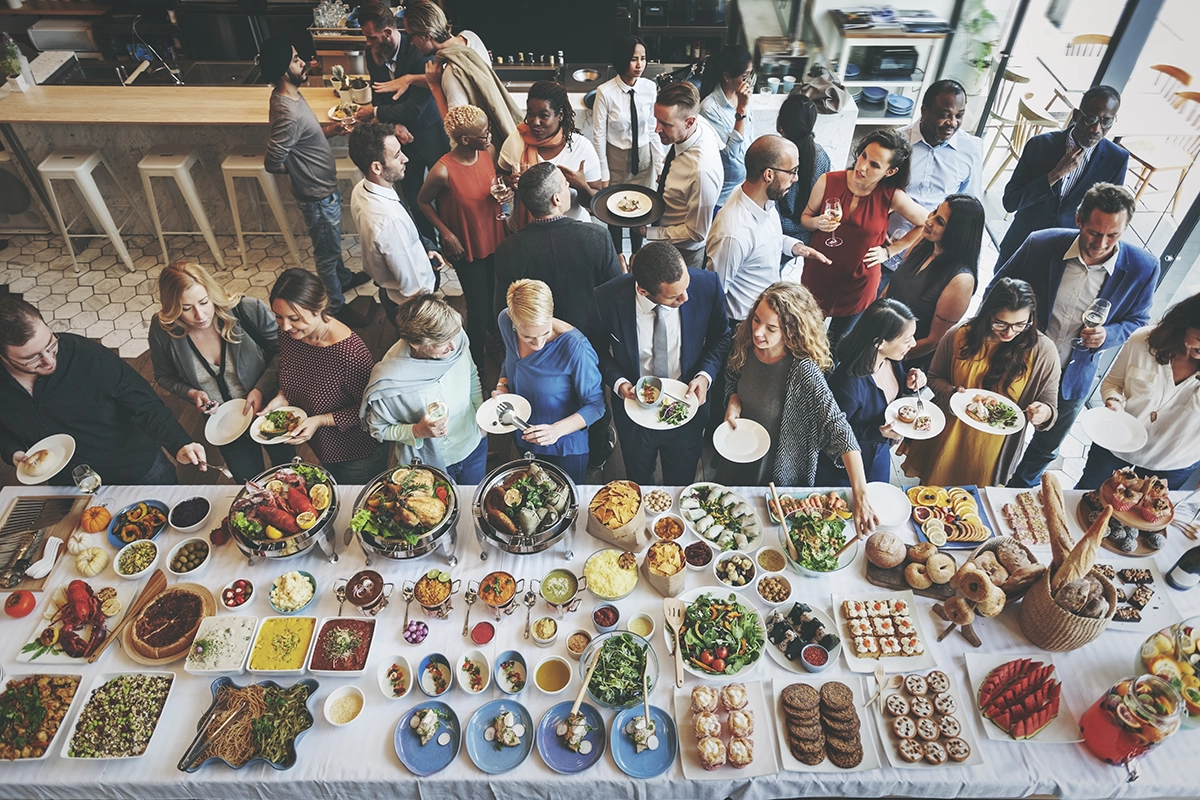
The challenge isn't volume—it's volume plus movement plus a tight clock. The biggest fix is structural: multiple serving points instead of a single line. A buffet with one queue for eighty creates a twenty-minute bottleneck. The same food across two or three access points changes everything.
Small-batch replenishment keeps food fresh throughout service. Our lunch buffet and modern Mexican buffet menus are designed to hold up well.
Matching the meal to the news
A celebration of a strong quarter deserves something memorable. A reset after a tough one calls for warm, generous, and unremarkable food. Routine all-hands need less than people think—save standout meals for moments worth marking.
When it moves outside
Many Scottsdale offices have courtyards and shaded patios that outperform conference rooms—for part of the year. Rules shift in warmer months; we've covered outdoor catering in Scottsdale's summer heat separately.
The Lunch That Repeats
The rhythm question
A recurring team lunch is a system, not a one-off purchase. The first decision is most important: pick a day and protect it. A floating lunch gets forgotten. A fixed day becomes something people plan around. In hybrid offices, workplace research shows food strongly influences which days people choose to come in. A predictable Thursday lunch can boost attendance more than a better meal on a random week.
Menu fatigue is real
It arrives sooner than expected. Participation drops quietly as people return to eating at their desks. In our experience running recurring programs, the rule that works is simple: don't repeat a cuisine family or service format on back-to-back lunches, and leave about three weeks before returning to anything similar.
Seasonal rotation offers a low-effort solution. Keep a stable framework and refresh components—a bowl format swaps vegetables and sauces; a family-style spread changes sides. The structure remains, the experience renews.
Reducing the coordination load
The hidden cost isn't the food—it's the person managing it weekly: polling, chasing responses, handling exceptions, all on top of their regular job. A standing arrangement eliminates most of that. One consistent partner who knows your rotation, restrictions, and preferences turns the weekly decision into a simple confirmation.
This is a core value of office lunch catering in Scottsdale: removing the management burden. Our lunch catering service is built around recurring schedules for exactly this reason.
The Needs You Don't Know About
Your dietary list is probably out of date
Roughly three in ten U.S. adults report seasonal allergies, eczema, or food allergies, with nearly 7% having diagnosed food allergies. In a room of forty, that's significant. Even more telling: nearly half of adults with food allergies developed at least one as an adult, and 21% say all of theirs began after age eighteen. The list from two years ago is likely outdated, and people rarely send updates.
Preference isn't the same as restriction—and both matter
Medical needs sit alongside vegetarian, vegan, gluten-free, and religious preferences. All determine whether someone eats. Treating preferences as optional leaves people with side salads. Our vegetarian and vegan menus ensure these aren't afterthoughts.
Handling it without making it a moment
The goal is seamless inclusion. Clear labeling allows quiet self-selection. Options built into the main spread—rather than isolated plates—mean no one has to identify themselves. A genuinely good vegetarian dish that everyone enjoys beats a correct one only vegetarians touch. Test: Could someone with restrictions eat well here without saying a word? Refresh lists quarterly, especially before meals with new people.
What Actually Changes the Number
Format is the biggest lever
People assume the menu drives cost. Format usually matters more. Drop-off covers food and transport. Plated service adds staff, timing, serviceware, and coordination. The same menu looks very different across formats—which is why format comes first in conversation.
What else moves it
Other factors include headcount and scale, menu complexity, separately prepared dietary items, staffing and rentals, and lead time. The National Restaurant Association's 2026 reporting notes ongoing cost pressures and hiring challenges across foodservice—the environment behind every quote.
Reading a quote properly
Quotes differ in what's bundled versus itemized. Compare details, not just headlines. More on what drives catering budgets, including full service, rentals, and staffing for office events.
The Gap Between Confirmed and Showed Up
Invited, confirmed, and actual are three different numbers
Ordering against the invite list is the most common source of waste. Across the office lunches we've catered, actual attendance reliably runs below the invite list—often by a fifth or more. Order against confirmed RSVPs, then build a modest buffer. A slight under-order with prudence beats large over-orders that create waste.
Drift varies by occasion
Client meetings stay firm, all-hands drift more, optional team lunches drift most. Day-of-week patterns in hybrid offices matter. Trust your office's history.
Format as insurance
When headcount is uncertain, individually portioned formats provide insurance. For firm counts, shared platters deliver better experience. Finalize around 48 hours out—late enough for accuracy, early enough for proper preparation. For morning meetings, our brunch menu covers the early side.
Planning Lunch for a Scottsdale Team
Ten occasions, ten different right answers. A client pitch and a Tuesday team lunch share little beyond the noon timing.
The real advantage of a consistent catering partner is that you stop explaining. They know your rooms, rotation, dietary needs, and the difference between meals that matter and those that simply need to be good.
Tableside Gourmet has served Scottsdale businesses for over 25 years—from weekly team lunches to client meetings, board sessions, and company milestones. Explore our office lunch catering and corporate catering services, or reach out for a consultation.
Frequently Asked Questions
How far in advance should we book a recurring office lunch program?
Two to four weeks is ideal for setup—time to build a rotation, collect dietary information, and establish a schedule. Once running, individual weeks usually need only 48 hours' notice for final headcount.
What service format works best for a client meeting in a conference room?
Plated or lightly staffed service for smaller groups. Everyone is served together, no queues, and conversation flows uninterrupted. Avoid self-serve in client settings—it breaks momentum and creates awkward hierarchy.
How do we handle dietary restrictions without singling anyone out?
Collect information privately and in advance. Label clearly and integrate options into the main spread. Refresh your list quarterly—adult-onset food allergies are more common than most realize.
How much food should we order if we're not sure how many people will show up?
Base it on confirmed RSVPs, expecting some drop-off. Use individually portioned formats when uncertain. Finalize about 48 hours out.
Should a board lunch be plated or buffet?
Plated, in nearly every case. It provides control over timing—one clean pause rather than staggered interruptions. A board lunch is a working meeting with food; the format should support the agenda, not compete with it.